Intelligence Does Not Stop at a Single Case
A single case is rarely the full picture.
The connection that changes an investigation may already exist beyond the case in front of you. It may have been recognised, reviewed and pre-categorised by another investigator working in another force, another country or another investigation.
That is the power of connected intelligence.
Modern visual evidence review is not only about what exists inside one seized device, dataset or case folder. It is about whether investigators can recognise when the material in front of them connects to something already seen, assessed or contributed by fellow professionals around the world.
When every case is treated as an island, investigators rebuild context from the ground up. Known material can be approached as though it is unknown. Similar material can remain separated. Patterns take longer to emerge. Connections that should support prioritisation stay hidden inside isolated workflows.
The issue is not simply volume. The issue is intelligence visibility.
Connected Intelligence Changes the Starting Point
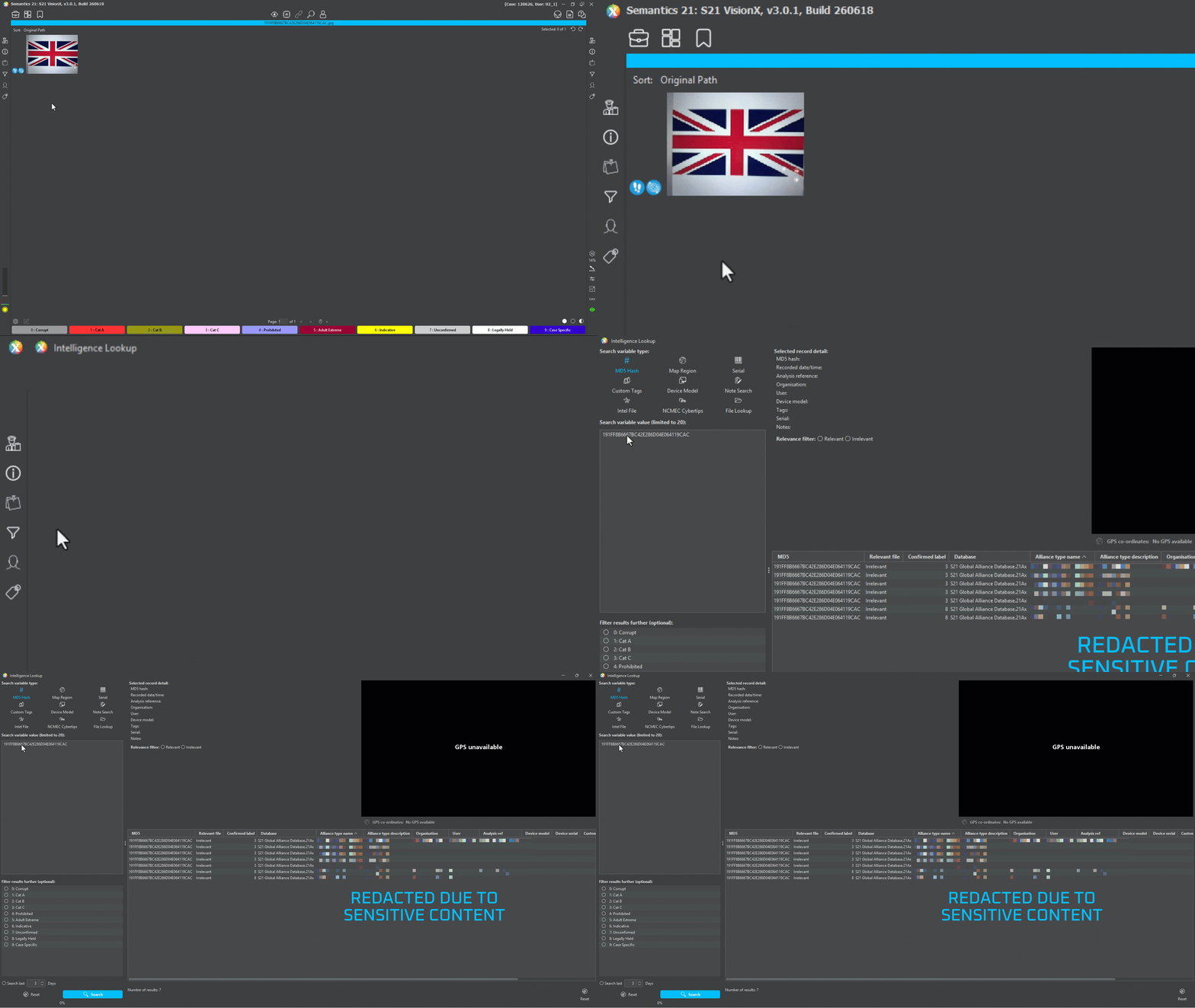
S21 VisionX is intelligence-led and works with the S21 Global Alliance Database (GAD) to extend investigations beyond a single case. It brings together records made by fellow investigators from around the world, giving teams a wider reference point for dealing with large-scale, sensitive and complex visual material.
By connecting to more than 3.7 billion investigator-contributed records, VisionX helps surface cross-case intelligence, find first-generation material faster and pre-categorise up to 70% of the case.
Context Before the Queue
This changes the starting point of review.
Instead of beginning with a blank queue, investigators can begin with context. Material already seen by trusted investigative teams can help inform prioritisation. Pre-categorised records can reduce unnecessary repeat review. Visual similarities can be brought forward. Links between cases can be made easier to recognise.
That does not remove professional judgement. It strengthens the workflow around it.
Investigators remain responsible for assessment, context and decision-making. The S21 GAD does not replace that judgement. It supports it by bringing relevant connections forward earlier, helping investigators spend less time treating every item as though it has no history.
The value is not just speed. Speed without intelligence simply moves the queue faster.
The real value is knowing when the material in front of you is not isolated. A file may connect to a known series. A visual pattern may relate to material seen elsewhere. A category may already have been applied by another investigator.
Modern visual evidence review should help teams ask not only “what is in this case?” but “what does this connect to?”
Built for the Realities of Investigative Review
S21 VisionX is designed for large-scale image and video analysis in secure, offline and restricted environments. The GAD extends that capability with global investigator-contributed intelligence and is available at no additional cost.
It does not grant access to another organisation’s case material. It is not a replacement for agency evidence systems. It does not make investigative decisions. It provides a wider intelligence reference point built from pre-categorised material contributed by investigators around the world.
No case should remain an island.
Wider intelligence brings connections forward, supports prioritisation, reduces unnecessary repeat review and gives investigators a stronger starting point for the work that follows.
Interested in Finding Out More?
Click here to email Semantics 21 and express your interest.