What sets purpose-built investigative AI apart from general-purpose LLMs? Discover how Cellebrite Genesis helps investigators analyze digital evidence with traceable findings, warrant-bound search, and secure data handling.

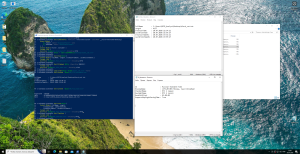
Vitalii offers a hands-on DFIR deep dive into WMI ActiveScriptEventConsumer persistence, from registration and execution to memory artifacts, Sigma detection, and cleanup.
Guocai Wang explores why “blurred” is not a diagnosis in forensic licence-plate analysis, and why the processing strategy should follow the material while the strength of interpretation follows the evidence.
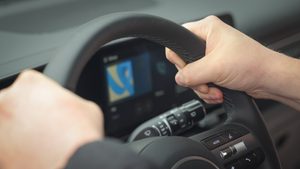
Can vehicle data reveal the difference between normal and reckless driving? Discover how iVe uses velocity logs, hard braking, and acceleration events to uncover critical changes in driver behavior and provide valuable evidence in investigations.
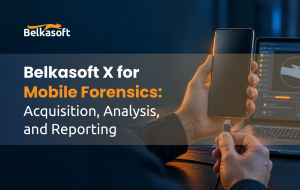
Explore Belkasoft X as a mobile forensics tool for iOS and Android acquisitions, full-file-system extraction, data recovery, application analysis, and reporting.
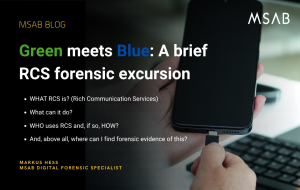
What does RCS mean for digital forensics? MSAB Digital Forensic Specialist Markus Hess breaks down how RCS works, who uses it and where investigators can find the forensic evidence.
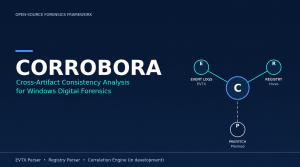
Dielle De Noon explores the development and validation of two key components of her open-source Windows digital forensics framework and how they lay the foundation for future cross-artifact correlation.
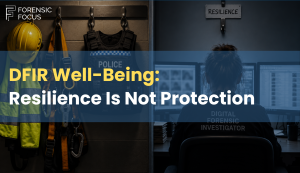
We would never tell a police officer to face a blade with “resilience” instead of body armour, so why do we expect digital forensic investigators to face repeated trauma with little more than resilience to protect them?
When six organisations receive evidence that one in five digital forensic investigators meet the clinical threshold for suicidal or self-harm ideation, and only one responds, what does that silence say about who is looking out for the profession?
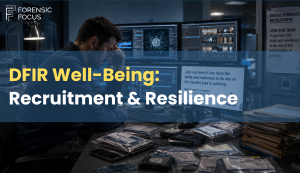
Does recruiting for “resilience” risk putting responsibility in the wrong place? Paul Gullon-Scott looks at what the evidence says about digital forensic well-being, workload and organisational support, and why the language we use matters.
What happens when disturbing material in a CSAM investigation has to be read, not viewed? Paul Gullon-Scott examines the psychological impact of messages, descriptions and AI prompts on digital forensic investigators.
Cellebrite shares 10 best practices for faster, safer, and more defensible AI-assisted investigations, with a focus on governance, traceability, and human oversight.
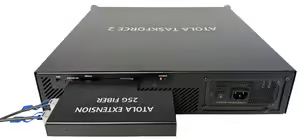
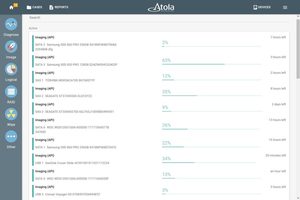
When every hour counts, imaging speed matters – explore the practical factors that can slow forensic acquisitions and learn how the right hardware, network setup and automation can help tackle growing backlogs.
A major new HMICFRS report exposes the urgent need for proactive, mandatory mental health support for digital forensic investigators and others working daily with online child sexual abuse material.
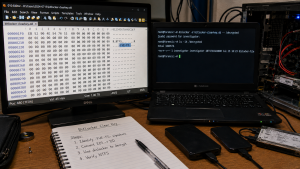
Learn how to identify and decrypt BitLocker Clear Key–protected forensic images using dislocker and bdeinfo, from spotting the “-FVE-FS-” signature to mounting the recovered NTFS volume for analysis.
We Value Your Privacy
We use technologies like cookies to store and/or access device information. We do this to improve browsing experience and to show (non-) personalized ads. Consenting to these technologies will allow us to process data such as browsing behavior or unique IDs on this site. Not consenting or withdrawing consent, may adversely affect certain features and functions.
Functional
Always active
The technical storage or access is strictly necessary for the legitimate purpose of enabling the use of a specific service explicitly requested by the subscriber or user, or for the sole purpose of carrying out the transmission of a communication over an electronic communications network.
Preferences
The technical storage or access is necessary for the legitimate purpose of storing preferences that are not requested by the subscriber or user.
Statistics
The technical storage or access that is used exclusively for statistical purposes.The technical storage or access that is used exclusively for anonymous statistical purposes. Without a subpoena, voluntary compliance on the part of your Internet Service Provider, or additional records from a third party, information stored or retrieved for this purpose alone cannot usually be used to identify you.
Marketing
The technical storage or access is required to create user profiles to send advertising, or to track the user on a website or across several websites for similar marketing purposes.
To provide the best experiences, we use technologies like cookies to store and/or access device information. Consenting to these technologies will allow us to process data such as browsing behavior or unique IDs on this site. Not consenting or withdrawing consent, may adversely affect certain features and functions.
Functional
Always active
The technical storage or access is strictly necessary for the legitimate purpose of enabling the use of a specific service explicitly requested by the subscriber or user, or for the sole purpose of carrying out the transmission of a communication over an electronic communications network.
Preferences
The technical storage or access is necessary for the legitimate purpose of storing preferences that are not requested by the subscriber or user.
Statistics
The technical storage or access that is used exclusively for statistical purposes.The technical storage or access that is used exclusively for anonymous statistical purposes. Without a subpoena, voluntary compliance on the part of your Internet Service Provider, or additional records from a third party, information stored or retrieved for this purpose alone cannot usually be used to identify you.
Marketing
The technical storage or access is required to create user profiles to send advertising, or to track the user on a website or across several websites for similar marketing purposes.