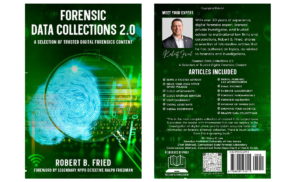
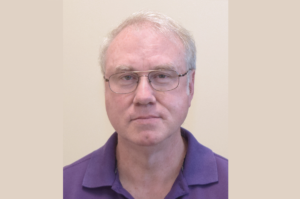
Angelo Floiran, a faculty member of the University of New Haven’s Masters in Digital Forensics program, reviews Rob Fried’s new book, Forensic Data Collections 2.0. Rob Fried is Senior Vice President and Global Head of Forensics and Investigations at Sandline
Ana Cash, MSISA, CEH, CHFI is a Technology & Cybersecurity Instructor at the College of Western Idaho.
FF: Please tell us a bit about your background, including your time as a Forensic Evidence Specialist, and how you started teaching at
Andrew Carr, MS, GCIH, CTCE is the Director of Cybersecurity Graduate programs and Assistant Professor of Cybersecurity at Utica University.
FF: Please tell us a bit about your background in computer forensics and how you ended up as Director of
Ben Findlay BSc (Hons) MSc PgCLTHE FHEA MBCS MCSFS MIScT MCIIS is Senior Lecturer in BSc (Hons) Computer and Digital Forensics and MSc Digital Forensics and Cyber Investigation at Teesside University.
FF: Last time we spoke, you worked for the
Si: Welcome friends and enemies to the Forensic Focus Podcast. Today with us, we have a genuine rockstar of the digital forensics scene in the UK. I would say, star of stage and screen. I think stage is upcoming. When
Timothy Wedge is Associate Professor of Cyber-forensics at Defiance College.
Please tell us a bit about your background and how you started teaching at Defiance College.After spending 22 years in the US Navy, I retired and started a new career
Sergio Tenreiro de Magalhaes, PhD is Chief Learning Officer for Champlain College Online and Associate Professor of Cybersecurity and Digital Forensics.
FF: Please tell us a bit about your background and how you started teaching at Champlain College.
My interest
Lawrence Snyder, III, PH.D. is Associate Professor of Mathematical and Digital Sciences at Bloomsburg University.
FF: Please tell us a bit about your background in digital forensics and how you started teaching at Bloomsburg University of Pennsylvania.
I have been
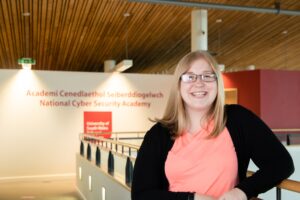
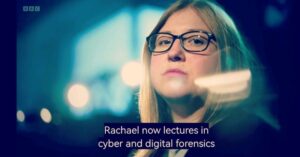
Rachael Medhurst MSc, BSc (Hons), FHEA, MCSFS, MCFE is Course Leader of MSc Applied Cyber Security, Senior Lecturer in Digital Forensics, and PhD student in Emerging Technology and Digital Forensics at the University of South Wales.
FF: Please tell us
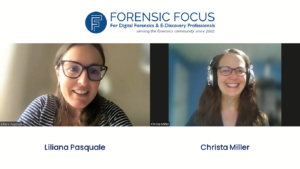
Christa Miller: As the cybersecurity talent gap continues to widen, a number of universities are developing programs to fill it. Among them is University College Dublin, which has just launched its brand new Master of Science in Cybersecurity program. Joining
Christa: Among the many decisions a digital forensics professional will make in their career, whether to pursue a graduate degree is among the biggest. Costs in time, and sometimes money, factor in, as well as how a degree could shape your future.
Human complexity lies at the heart of so much of digital forensics – both the artifacts that offer insights into people’s motives, means, and opportunity to commit wrongdoing, and the investigations that reveal them.
Our research roundup for the end
The discussion about how to mitigate human bias in forensic science continued in September. Inclusiveness is a key part of this, not just in terms of racial, gender, ability, or other identity, but also in terms of expertise. This month
The month of May saw a robust, diverse set of academic papers published. Tools and techniques are as present as ever — focusing that month on Windows 10 and mobile malware — but so are discussions about how to ensure
Held virtually once again in response to the COVID-19 pandemic, the Digital Forensics Research Workshop Virtual Europe (DFRWS-EU) embodied its vision of cultivating an inclusive, transdisciplinary approach in both program and activities by featuring 10 of the 29 research paper
We Value Your Privacy
We use technologies like cookies to store and/or access device information. We do this to improve browsing experience and to show (non-) personalized ads. Consenting to these technologies will allow us to process data such as browsing behavior or unique IDs on this site. Not consenting or withdrawing consent, may adversely affect certain features and functions.
Functional
Always active
The technical storage or access is strictly necessary for the legitimate purpose of enabling the use of a specific service explicitly requested by the subscriber or user, or for the sole purpose of carrying out the transmission of a communication over an electronic communications network.
Preferences
The technical storage or access is necessary for the legitimate purpose of storing preferences that are not requested by the subscriber or user.
Statistics
The technical storage or access that is used exclusively for statistical purposes.The technical storage or access that is used exclusively for anonymous statistical purposes. Without a subpoena, voluntary compliance on the part of your Internet Service Provider, or additional records from a third party, information stored or retrieved for this purpose alone cannot usually be used to identify you.
Marketing
The technical storage or access is required to create user profiles to send advertising, or to track the user on a website or across several websites for similar marketing purposes.
To provide the best experiences, we use technologies like cookies to store and/or access device information. Consenting to these technologies will allow us to process data such as browsing behavior or unique IDs on this site. Not consenting or withdrawing consent, may adversely affect certain features and functions.
Functional
Always active
The technical storage or access is strictly necessary for the legitimate purpose of enabling the use of a specific service explicitly requested by the subscriber or user, or for the sole purpose of carrying out the transmission of a communication over an electronic communications network.
Preferences
The technical storage or access is necessary for the legitimate purpose of storing preferences that are not requested by the subscriber or user.
Statistics
The technical storage or access that is used exclusively for statistical purposes.The technical storage or access that is used exclusively for anonymous statistical purposes. Without a subpoena, voluntary compliance on the part of your Internet Service Provider, or additional records from a third party, information stored or retrieved for this purpose alone cannot usually be used to identify you.
Marketing
The technical storage or access is required to create user profiles to send advertising, or to track the user on a website or across several websites for similar marketing purposes.