Investigators are increasingly required to make decisions based on imagery whose authenticity is uncertain. AI-generated and manipulated media now appear across a wide range of cases — from safeguarding and CSAM investigations to fraud, extremism, and misinformation.
Once imagery has been shared, re-encoded, or stripped of context, determining whether it represents real events, real people, or real victims becomes significantly more complex. Uncertainty at this stage can delay investigative decisions and safeguarding action.
When authenticity can’t be assumed, assessment must be possible.
To support investigator-led assessment in these conditions, a dedicated capability was developed and used operationally inside S21 VisionX, enabling teams to analyse imagery directly for indicators of manipulation or synthetic generation.
Following over a year of real investigative use and demand from operational teams, Semantics 21 has now released this capability as a standalone tool: S21 Deepfake Detector.
The tool analyses images and individual video frames using multiple forensic indicators and presents confidence-based assessments, rather than binary conclusions. It is designed to support human judgement, not replace it, providing clarity where uncertainty would otherwise slow progress.
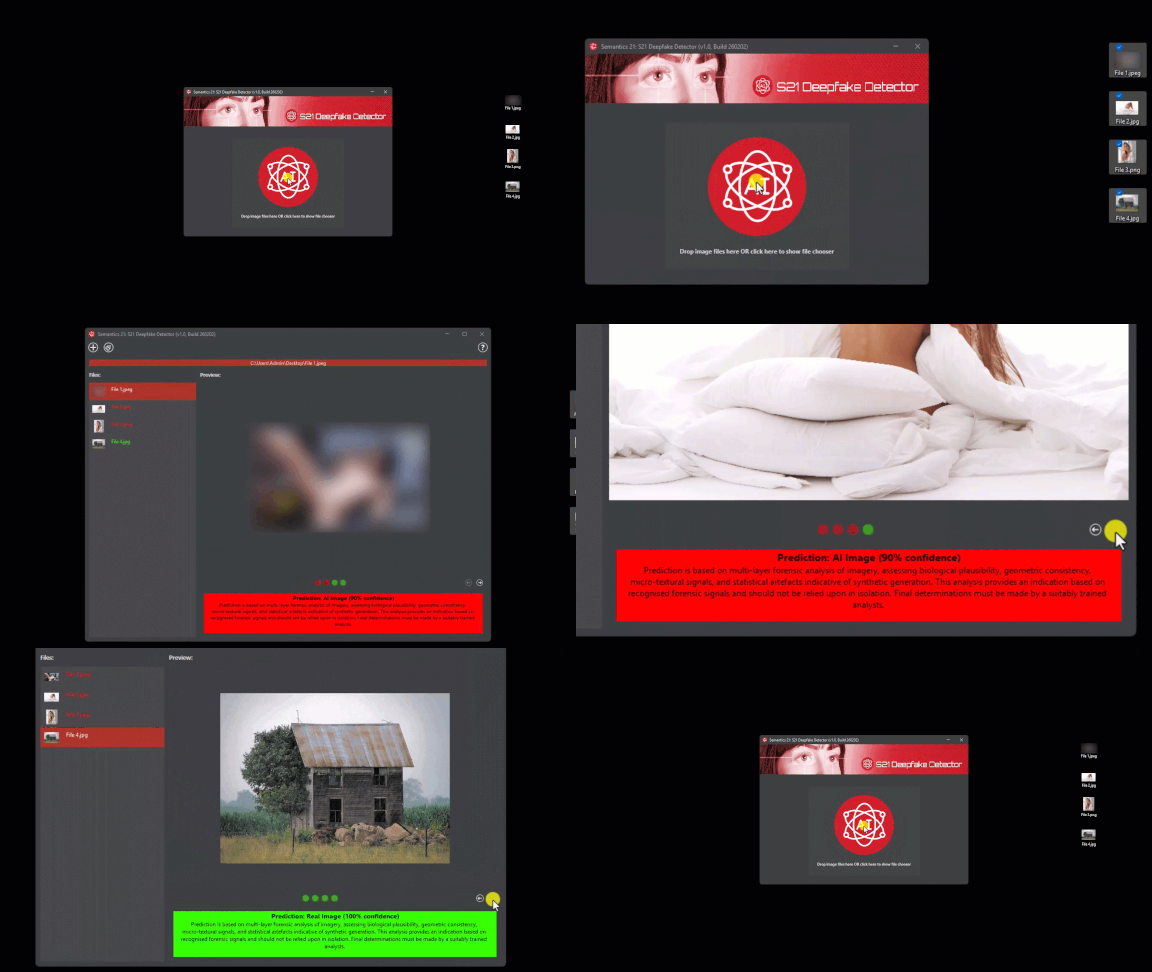
Deepfake Detector operates entirely offline, works with imagery exported from existing systems, and prioritises explainability over automated decision-making.
It works alongside existing investigative tools, with no requirement to replace platforms, alter workflows, or introduce new training burdens.
Semantics 21 has framed the release as a response to a growing investigative reality: authenticity assessment is now a standard requirement, not a specialist niche.
More information and demonstrations are available at semantics21.com/s21-deepfake-detector