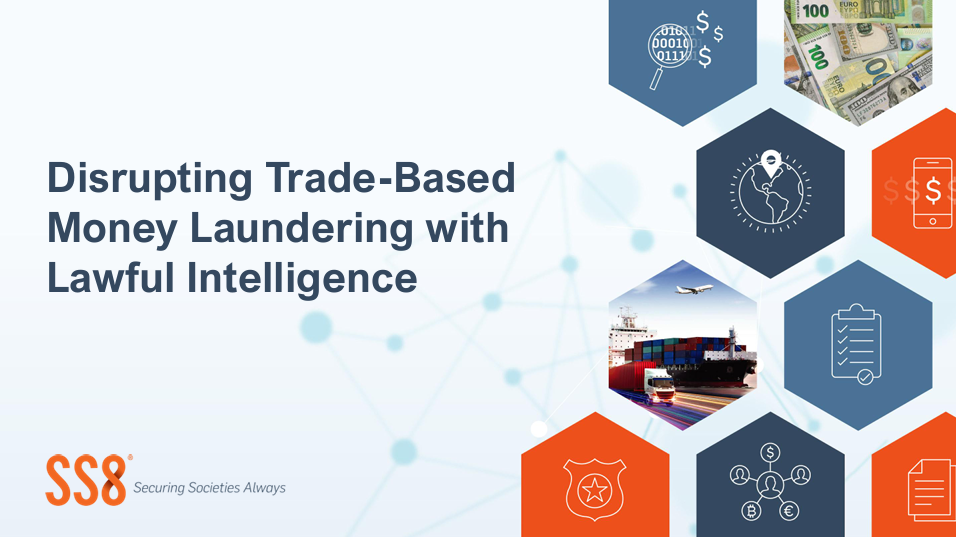
A new whitepaper from SS8 examines how trade-based money laundering (TBML) continues to be one of the most difficult forms of financial crime for law enforcement and intelligence agencies to detect. By embedding illicit value within legitimate commercial transactions, TBML allows criminal networks to move money across borders while avoiding traditional financial controls and audits.
From the outset, investigators face a fundamental challenge: the data needed to validate a trade transaction is fragmented across multiple systems and jurisdictions. Customs declarations, bills of lading, banking records, corporate registries, logistics data, and communications metadata are rarely connected. Criminal organisations exploit these gaps deliberately, using shell companies, phantom shipments, misclassified goods, and layered intermediaries to obscure the true flow of value. At the scale of global trade, manual review becomes impractical, and rule-based red flags generate high volumes of false positives.
The whitepaper outlines why effective TBML detection requires moving beyond isolated indicators toward evidence-grade, multi-domain correlation. Investigators must be able to reconstruct what actually happened — who was involved, what moved, where it went, when activity occurred, and how value flowed — and compare that reality with what was declared on paper. This approach demands lawful intelligence workflows capable of ingesting, normalising, and analysing data from trade, financial, communications, and location sources together.
TBML Investigations in Practice
To illustrate these challenges, the paper presents a series of realistic, hypothetical investigative scenarios based on real cases. These include uncovering phantom shipments that never physically occurred, identifying carousel fraud used to inflate trade volumes and reclaim VAT, and detecting invoice manipulation linked to terror financing. In each scenario, investigators use correlated datasets, timeline reconstruction, link analysis, and geospatial insights to surface inconsistencies that would not be visible within siloed systems.
Rather than replacing analyst expertise, the paper emphasises the role of automation in accelerating investigative work while maintaining legal and evidentiary standards. By reducing the time required to connect disparate data sources and visualise patterns, agencies can move from delayed detection to timely intervention — disrupting illicit financial flows before they are fully absorbed into the legitimate economy.
Read the full whitepaper to explore how lawful intelligence and data fusion can help close visibility gaps in trade-based money laundering investigations and support more effective, defensible enforcement outcomes.