Forensic Focus Digest, May 10 2024
News
MORE
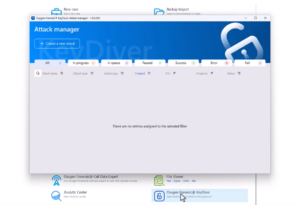
Oxygen Forensic® KeyDiver
Webinars
MORE
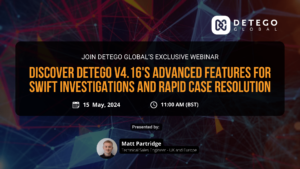
Detego Global Announces Webinar To Demonstrate The Powerful New Features Of Detego v4.16
News
MORE
Digital Forensics Round-Up, May 08 2024
News
MORE
UK Parliamentary Legislation Introduced Against Deepfakes
News
MORE
Digital Forensics Round-Up, May 01 2024
News
MORE
AI-Powered License Plate Reading With Amped DeepPlate
Podcast
MORE
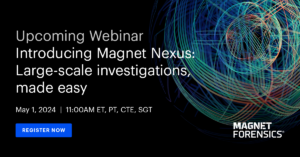
UPCOMING WEBINAR – Introducing Magnet Nexus: Large-Scale Investigations, Made Easy
News
MORE
Forensic Focus Digest, April 26 2024
News
MORE
Forensic Focus Podcast Ep. 84 Recap: Cyber Scandals And When (Not) To Trust Computers
News
MORE
Digital Forensics Round-Up, April 24 2024
News
MORE
UPCOMING WEBINAR – Empowering Investigations With Data From The Cloud
News
MORE
2024 Q1 Review On MD-Series Release Note Highlights
News
MORE
Alex Beddard, Investigator, Chainalysis
Interviews
MORE
Digital Forensics Round-Up, April 17 2024
News
MORE
Magnet Forensics Announces Magnet One, A Revolutionary Platform For The Pursuit Of Justice
News
MORE
UPCOMING WEBINAR – Fireside Chat: Navigating The Cloud - Expert Insights On Emerging Cloud Threats And Complexities
News
MORE
Maltego Acquires PublicSonar And Social Network Harvester To Propel Vision Of An All-in-One Investigation Platform
News
MORE
Filip Kachnic, Business Development Manager, Eyedea Recognition Ltd
Interviews
MORE
Forensic Focus Podcast Ep. 83 Recap: Kickstarting Your Digital Forensics Cybersecurity Career
News
MORE
Forensic Focus Digest, April 12 2024
News
MORE
Magnet Forensics Introduces Magnet Nexus For Faster, Easier Enterprise-Scale Investigations
News
MORE
Atola Insight Forensic Gets iSCSI Support for Remote Imaging
News
MORE
Cyber Scandals And When (Not) To Trust Computers
Podcast
MORE
Introducing XRY 10.9, XAMN 7.9, And XEC 7.9 From MSAB
News
MORE
Digital Forensics Round-Up, April 10 2024
News
MORE
Aligning Forensic Investigations To The MITRE ATT&CK Framework
News
MORE
Robert Jan Mora, Principal Threat Investigator, Volexity
Interviews
MORE
Easily Configure And Manage Password Recovery Clusters With Passware Kit 2024 v2
News
MORE
Is There A Growing Talent Gap In Digital Forensics?
News
MORE
Read our digest of the latest content on the Forensic Focus website, including news, interviews, podcasts, articles, press releases, and more.… Read more
Jordan: Hello everyone, Jordan Portfleet here with the Oxygen Forensic training team. Today’s topic is going to be KeyDiver. Now, what is KeyDiver, you ask? Well, the time has come to introduce our new brute force module, the Oxygen Forensic… Read more
Detego Global is hosting a free webinar on 15 May at 11 am BST to showcase the groundbreaking features of its latest release, Detego v4.16. This update promises to transform how investigators approach digital forensics and incident response.
In the… Read more
A round-up of this week’s digital forensics news and views:
Russian suspected cybercrime kingpin pleads guilty in US, TASS reports
Alexander Vinnik, accused of laundering over $4 billion via bitcoin, was arrested in Greece in 2017. After a conviction in… Read more
On April 16th, the UK government announced plans to introduce legislation through an amendment to the existing Criminal Justice Bill, targeting the creation of deepfake pornographic content. This move comes in the wake of the Online Safety Act which criminalised… Read more
A round-up of this week’s digital forensics news and views:
Thorn and All Tech Is Human Forge Generative AI Principles with AI Leaders to Enact Strong Child Safety Commitments
We are at a crossroads with generative artificial intelligence (generative AI).… Read more
Desi: Welcome, Forensic Focus listeners. We are back again with Marco from Amped. We’re really excited. We were just talking about having an anniversary with Marco, because we had him on the 4th of April, and today is the 12th,… Read more
REGISTER NOW HERE
The shift to remote work has intensified the need for enterprise DFIR solutions that can reliably and more efficiently acquire data from remote endpoints, while also providing stakeholders with broader organization-wide insights.
To help enterprise DFIR investigation… Read more
Read our digest of the latest content on the Forensic Focus website, including news, interviews, podcasts, articles, press releases, and more.… Read more
Si and Desi explore issues of transparency and potential misrepresentation within the cybersecurity industry. They consider the ethical implications of companies re-selling open-source tools as part of a managed service, as well as the questionable ways data and statistics are… Read more
A round-up of this week’s digital forensics news and views:
A template for creating and sharing ground truth data in digital forensics
Ground truth data (GTD) is used by those in the field of digital forensics (DF) for a variety… Read more
REGISTER NOW HERE
Cloud-based mobile device data is rapidly becoming more and more key to corporate investigations and eDiscovery cases.
90% of investigators say that cloud-based forensic tools will become key in the future as more unique evidence moves to the… Read more
GMDSOFT is excited to share the highlights from the first quarter review of our MD-Series! Despite the busy schedule of this quarter since 2024, we’ve made significant enhancements and have some exciting updates in Q1 releases.
We’ve added exciting features… Read more
FF: Could you start by telling us a bit about your background in law enforcement and how you ended up as an Investigator at Chainalysis.
I don’t remember a time when I didn’t want to join the police! I was… Read more
A round-up of this week’s digital forensics news and views:
Beyond the Windshield: Dashcam Forensics – A Quick Overview
Let’s delve into the realm of dash cameras for a moment. These devices serve as impartial witnesses, capturing crucial evidence leading… Read more
A new digital forensics platform empowers public safety agencies to redefine digital investigations and seek justice faster.
Magnet Forensics announced today the introduction of Magnet One, an innovative end-to-end digital investigation platform that connects technology, people, and processes, and allows… Read more
We Value Your Privacy
To provide the best experiences, we use technologies like cookies to store and/or access device information. Consenting to these technologies will allow us to process data such as browsing behavior or unique IDs on this site. Not consenting or withdrawing consent, may adversely affect certain features and functions.
Functional
Always active
The technical storage or access is strictly necessary for the legitimate purpose of enabling the use of a specific service explicitly requested by the subscriber or user, or for the sole purpose of carrying out the transmission of a communication over an electronic communications network.
Preferences
The technical storage or access is necessary for the legitimate purpose of storing preferences that are not requested by the subscriber or user.
Statistics
The technical storage or access that is used exclusively for statistical purposes.The technical storage or access that is used exclusively for anonymous statistical purposes. Without a subpoena, voluntary compliance on the part of your Internet Service Provider, or additional records from a third party, information stored or retrieved for this purpose alone cannot usually be used to identify you.
Marketing
The technical storage or access is required to create user profiles to send advertising, or to track the user on a website or across several websites for similar marketing purposes.
To provide the best experiences, we use technologies like cookies to store and/or access device information. Consenting to these technologies will allow us to process data such as browsing behavior or unique IDs on this site. Not consenting or withdrawing consent, may adversely affect certain features and functions.
Functional
Always active
The technical storage or access is strictly necessary for the legitimate purpose of enabling the use of a specific service explicitly requested by the subscriber or user, or for the sole purpose of carrying out the transmission of a communication over an electronic communications network.
Preferences
The technical storage or access is necessary for the legitimate purpose of storing preferences that are not requested by the subscriber or user.
Statistics
The technical storage or access that is used exclusively for statistical purposes.The technical storage or access that is used exclusively for anonymous statistical purposes. Without a subpoena, voluntary compliance on the part of your Internet Service Provider, or additional records from a third party, information stored or retrieved for this purpose alone cannot usually be used to identify you.
Marketing
The technical storage or access is required to create user profiles to send advertising, or to track the user on a website or across several websites for similar marketing purposes.