My Digital Forensics Career Pathway

by Patrick Doody Let me start by introducing myself. I’m Patrick, 39 years of age and from a working-class background. I’ve lived in London all my life, my parents moved to the UK from Southern Ireland when they were young
From Crime To Court: Review Principles For UK Disclosure

by Hans Henseler UK Law Enforcement agencies are facing significant challenges related to digital evidence disclosure in criminal prosecution cases. Suspects who are charged with a crime must have access to all relevant evidence to ensure a fair trial, even

Leveraging DKIM In Email Forensics

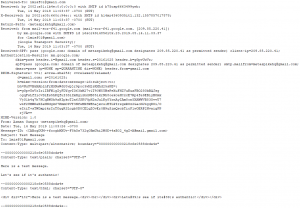
by Arman Gungor My last article was about using the Content-Length header field in email forensics. While the Content-Length header is very useful, it has a couple of major shortcomings: Most email messages do not have the Content-Length header field

Walkthrough: Carving With Belkasoft Evidence Center

by Yuri Gubanov, Danil Nikolaev & Igor Mikhailov © Belkasoft Research Carving is an irreplaceable technique widely used in data recovery and digital forensics. By using carving, we essentially perform a low-level scan of media for various artifacts, looking for

Mobile Virtual Network Operators (MVNOs) In The US

by Patrick Siewart  Increasingly, cellular records and their associated location information are being used in civil litigation, where previously they were considered to be a “law enforcement only” tool.  But in the age when users carry at least one smartphone

Windows Registry Analysis 101

by Chirath De Alwis Computer forensics is the process of methodically examining computer media (hard disks, diskettes, tapes, etc.) for evidence [1].  When considering computer forensics, registry forensics plays a huge role because of the amount of the data that

Digital Forensics Jobs And Career Paths

Digital forensics jobs and career paths
Digital forensics jobs and career path options have grown significantly over the past few decades. In fact, the profession has matured to the extent of making multiple career paths possible. Now, professionals who are interested in finding a job in

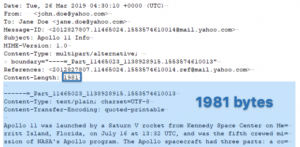
Using The Content-Length Header Field In Email Forensics

by Arman Gungor As forensic examiners, we often have to analyze emails in isolation without the benefit of server metadata, neighbor messages, or data from other sources such as workstations. When authenticating an email in isolation, every detail counts—we review

Burnout in DFIR (And Beyond)

by Christa Miller, Forensic Focus Quite a lot has been written over recent weeks about burnout. Not only DFIR-specific posts, first from Richard Bejtlich and then, in follow-up from Eric Huber and Brett Shavers; but also news articles including: Why