








The following transcript was generated by AI and may contain inaccuracies.
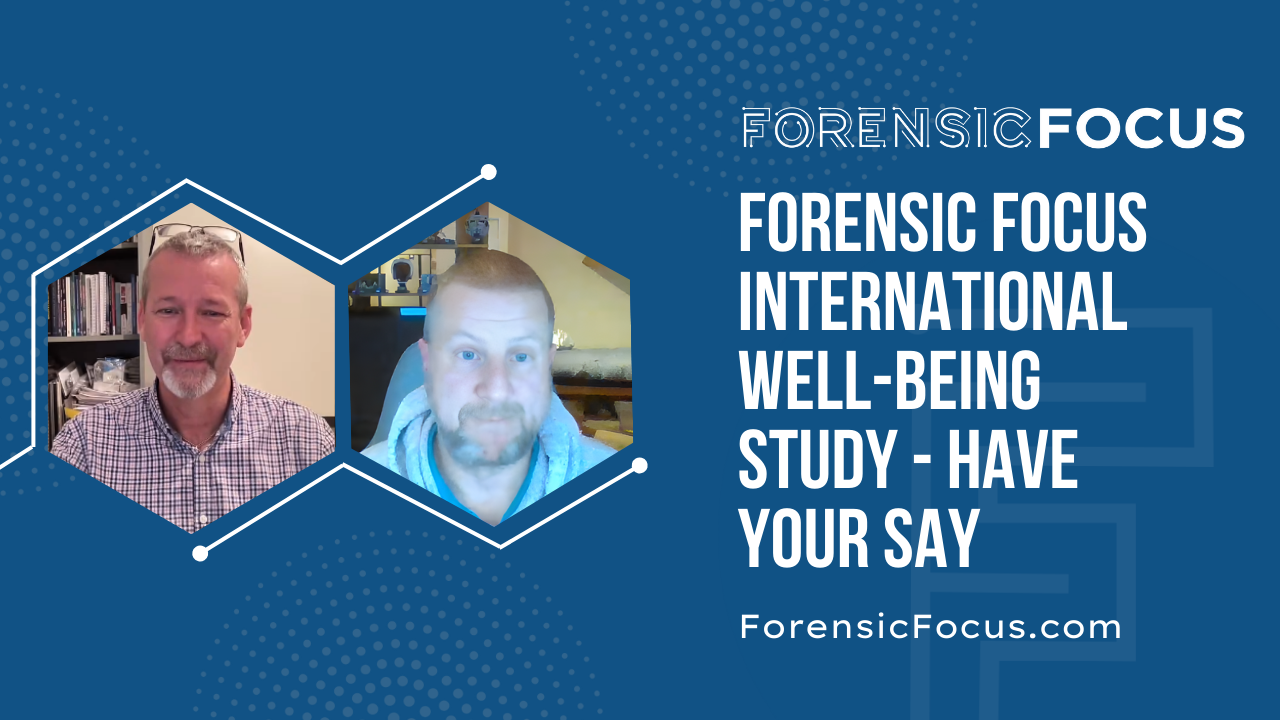
Paul: Welcome to today’s Forensic Focus podcast. Joining me today is Phil Anderson from Northumbria University. Phil, can you introduce yourself?
Phil: Thank you very much, Paul. Pleasure to be here and talk to you about this. As you’ve mentioned, I’m an academic at Northumbria University and have been—I keep adding this up—24 years of being an academic.
Although 24 years, not all of it was based around digital forensics. When I first started, I was teaching programming and web design and web development. Then round about 2005, 2006, I can still remember to this day, a colleague walked in—a senior colleague in the school at the time, we were a school back then—said, “Have you heard of digital forensics and do you fancy teaching this?”
I did a bit of research and thought, “Yeah, please.” There was three of us, and I think at the time there was maybe only three or four other universities in the UK that had undergraduate digital forensics programs on the go.
In 2007, as part of the degree program design, we reached out—closest to us in Newcastle city centre was Northumbria Police. We reached out to them, and the ones that were working there at the time, what I felt was we needed to get the students the skills that would work in industry. I’ve always felt that doesn’t matter what subject you teach—equip your students with the skills so when they go and look for jobs, they’ve got the latest skills.
That’s why I reached out to Northumbria Police at the time. I said, “I need to understand what your job is and what your roles are and what we can do.” I’ve had a relationship with Northumbria Police—thankfully a good relationship—ever since then.
Things have moved on. Back then, I think there was five DCs, DSs, and a detective inspector—that was the unit. And now, who knows how many, full of civilians.
Paul: Yes. That was the unit I joined when I first walked into that room. I think there was six of us. Frightening. And that was at Market Street as well?
Phil: It was, yeah. Funnily enough, I met Alan Hay—I caught up with him for a cup of coffee last week. It was great.
Paul: Alan Hay was my mentor when I first started. Yeah, he’s a great guy. Clever. Really clever.
Phil: He’s still got the bug. I don’t think he’s applying his trade elsewhere, but he’s still got the bug for stuff.
Paul: Yeah. He’s doing very well as well. So just for the benefit of those watching the podcast, Phil and I have been working really hard for the past five, six months. I was trying to think when—
Phil: Yeah, well I think the initial conversation was probably two years ago. I can remember meeting you at work and I was trying to think—I don’t know how I picked this up ’cause I reached out to you. I don’t know whether it was a LinkedIn post you’d done, or I can’t remember if you’d reached out to me.
But I think I reached out to you from something you’d said, or I’d heard you mention, and it was about this and you wanted to do some more research on it. It’s something that’s always sat in the back. It’s always niggled me. I’m not gonna suggest I could ever attempt to solve it, but it’s one of these things where there’s a problem and everybody just seems to be ignoring this issue.
The great machine and the great cogs just keep on turning, and then as you say—before rudely interrupted—we got our heads together about six months ago and thought, “Right, let’s get to the bottom of this.”
Paul: You’re right. It was about two years and it was a post that I put out. You reached out and then I came to meet you at the university. And for the last six months, we’ve been planning the Forensic Focus International Well-Being Study, haven’t we?
Phil: We have. When it comes to a survey, you’ve got to be sensible. How many questions? We’d probably like to ask a load more questions, but we’ve got to be sensible about how many questions. “By the way, this survey will take one hour and 50 minutes to complete”—no, that’s a bit ridiculous.
But we would want to know about as much as that to be real. I know before you started this recording, you spoke about previous work you’ve done in this. But it’s trying to get—for us to give a broad overview—I think it’s for us to try and get an idea, a handle on how big this problem is with DFIs and the DFI investigators in their jobs. It’s how are they coping with what they do on a day-to-day basis.
Paul: Absolutely. Without the evidence-based research, which the survey will generate, we have no foundation to base the claims that DFIs are struggling.
Phil: It’s one of these funny things. Most people within this kind of area will know, whether it’s within law enforcement, whether it’s in the private sector. We know the kind of material that’s involved in these investigations.
It’s one of these things—people are aware of the issue. I don’t know quite how to describe it, but it’s like you’ve got a cupboard in the home where it’s the messiest cupboard in your house, but if you just keep the door closed, it’s fine. We don’t need to worry about it.
But I think what we need to do is bring that up. People are struggling. These DFIs are struggling on a daily basis. They’re doing a great job under tremendous stress, tremendous pressure.
We’ll gather the evidence and say, “Yep, you’re right. This is what you told us, and this is the situation.” And then hopefully from that—let’s not be frightening—let’s shout out and tell everybody these are the particular problems.
We’ve got a good idea of what they’ll be anyway, but now we’ve got evidence behind it. X number of people fill the survey in—the international survey. And then once we know that’s out there, right, what are we going to try and do?
I know it’s not gonna get fixed overnight. It’s not. But potentially there could be little things that we could suggest, we could recommend—which is where the academic research will come in. It’s one of these things that’s almost like I’ve got an itch and it’s time to scratch it now. Because why not us? Let’s do it.
Paul: I think it’s important to stress that the Forensic Focus International Well-Being Study is an international survey. It isn’t just bound to the UK. Any digital forensic investigator anywhere in the world can participate.
The other important thing to stress is it isn’t just for DFIs who are in policing—it is for DFIs who work anywhere, in any industry. Both policing and private.
Phil: Most definitely. Once we get their views across, we can look at maybe what’s going on with their particular roles, what’s their day-to-day job like in law enforcement. Obviously your background—you’ve got a pretty good idea on that. I’ve got a reasonably good idea.
But again, are there similarities? Are there significant differences? For us as well, we talk about the public sector. What often falls with public sector is lack of funding—is that an issue that we’re gonna see in the private sector, or we don’t know. There may be different challenges and different pulls and pushes.
But fundamentally, if there are any similarities across the whole sector, it’s not a particular public or private thing. We want to hear from you.
Paul: Absolutely. If you’re out there in public or private sector, whether you are in the UK or whether you work internationally, please fill in the survey. Please.
This is your chance to have your voice heard. Phil and I have worked diligently for the past six months. We have put a lot of work into arranging this. We have gained ethics via Northumbria University, so Northumbria University are also supporting this.
There are a number of other academics sitting in the background who are also supporting this study. So it is well supported. It’s a very serious piece of research which will come from this.
Now, aside from the obvious—measuring the stressors that DFIs can succumb to, which we will be doing, and we’ll compare that to the stats around people who don’t work in this type of area to see if there’s elevations in DFIs’ responses—there are four very specific and very interesting questions that we’re going to try and explore from the data that’s collected, isn’t that right, Phil?
Phil: Yeah.
Paul: So let’s have a little chat about those four questions. The first question comes from discussions that I’ve had with DFIs, and I’m sure Phil will echo what I’m about to say.
Many DFIs have asked, have questioned, how they can last so long doing the work that they do and being exposed to the traumatic material that they are. It’s something that I’ve thought about quite a lot. I’ve discussed it at length with Phil during the creation of this study.
An idea that we’ve come up with is: if an individual who is a DFI has experienced early life trauma, we hypothesize that—haven’t experienced that trauma growing up and then in adulthood—does that make them a more resilient person? So they can last longer in what is an incredibly difficult job.
Phil: And lasting longer is not necessarily a good thing either.
Paul: No, it isn’t.
Phil: The human mind, the human body’s an extraordinary thing and it tries to cope the best it can as life throws things at you. Like you say, if somebody who’s a DFI has experienced early life trauma, are they more prepared or more aware or can manage slightly better if they do come into a DFI role and then have to deal with some of the traumatic material?
We talk about traumatic material—the obvious one is the CSAM stuff. But again, I can imagine there’ll be potentially horrific images around murder scenes and all kinds of other stuff as well. But obviously predominantly it’s gonna be CSAM stuff.
One of the interesting things is, if people have experienced in their early adulthood, early childhood, potentially, are they then better prepared or stronger to deal with it?
Paul: Yeah. It’ll be really interesting to see if increased resilience, having lived through trauma as they’ve grown, then moderates the effect of, say, post-traumatic stress disorder. And whether those who report higher levels of early trauma report lower levels of PTSD.
Phil: Absolutely. Whatever—obviously it’ll be certainly different between law enforcement in the UK and potentially internationally as well, and the private sector. But we know part of the support network is potentially counselling sessions as well.
Do they—are they able to express and understand the feelings or emotions around PTSD, or are their coping mechanisms different? We’re not suggesting that they’re more capable of maybe locking their emotions away, but potentially they may be able to deal with them in a better way.
It’s just a different pressure cooker for an individual. Everybody’s different. But if we have this pressure cooker thing, eventually every human being has a tolerance level. And when people reach it, that’s when it becomes a crisis.
You want, hopefully, people never to reach their maximum level of tolerance because then it becomes a problem. Different people handle different situations in different ways. There’s other elements to this as well.
For example, male and female DFIs—do they handle things slightly differently? I’ve had conversations with police officers in the past, and we know people handle situations differently. But in the DFI world, that situation is constant—it’s very similar from one day to the next. It’s understanding how they are affected.
Paul: That particular point you touched on is really important, which I want to reiterate. That question doesn’t mean that if you’ve lived through early life trauma or early adulthood trauma, that you are completely immune to this. Because you’re not.
Phil: It depends on the results we get back. The more people that fill it in, the better spread of results we’ll get. We may find that people who suffered early childhood trauma may find that their trigger point is significantly lower than other people who haven’t. This is what we want to learn as well.
If you look at DFIs—early career DFIs that join—they may go through the first five, ten years of being a DFI and be fine. And then one day they walk in and they get a particular case. And that particular CSAM case is the one that’s just like, “Right, that’s it for me.”
When we sat down and thought about these questions and all these hypotheses we’re trying to potentially pull out of the data—yes, we’re gonna make a couple of predictions, but in theory, we’ve got no idea how this is gonna unfold until we see the actual raw data.
Paul: Really, we haven’t. We can make a hypothesis on what we think might come out from it, but in fact, we have no idea until we analyse the data that’s collected.
Phil: We can talk about it as well. Obviously, from working at a university, we’re very aware of neurodivergent students and how we offer the right support for them—particularly around some of the computer science subjects. We often have a higher ratio of neurodivergent students as well.
They go through the undergraduate process, they go and take up jobs and things like that. And does—how does that affect them potentially? Those that do have a neurodivergent condition, how does it then help them in the DFI world? Or does it not help them at all?
We’re trying to grab as much as we can. We’ve got this one big opportunity. We’re trying to grab as much as we can from people completing the survey, just to try and get a bigger picture and a bigger understanding of the individuals—these DFIs.
Paul: Absolutely. You touched on something really important there—neurodiversity and digital forensics—and we are gonna come back to that in a second because it’s one of the main questions we want to explore.
So the second main question that we want to explore is coping and resilience and the mind-body connection in DFIs.
We want to explore how occupational stresses, coping strategies, predict both psychological and physical health problems in DFIs. We’re gonna do that by integrating workload, exposure, case pressures, coping styles, and resilience measures.
It’s a multi-path approach to explore somatic symptoms encountered by DFIs. We’re not just looking at psychological symptoms which develop—we’re looking at physical symptoms which develop from the psychological symptoms.
That for me is a really important area to look at because there is very little, if any, peer-reviewed evidence to support the physical impact.
Phil: You’re right. Straight away, everybody thinks about the mental health issues around it, and yes, that. But there’s the link then—obviously the mental health issues, the psychological issues—and then the physical impact that will take on an individual.
Like you said, there’s very little literature out there around it. We’ve got this opportunity to see—is there a link between it? Is it a bit sporadic or is there clearly no link? I suspect there’s a link. It may be subtle because obviously every individual’s different.
If we don’t specifically talk about the DFI role—most people in their workplace will have stress factors, whether it’s time pressures, financial pressures, workload pressures—whatever it is, they will have stresses and they will manifest quite quickly into psychological issues.
And then if it’s a long-term stress factor, greater impact on the psychological issues. And then—I’m no medical expert—but then I would think physical ailments, issues that you’ll end up having to deal with.
Me personally—I don’t mind talking about this—I took three weeks off. I was off work for three weeks earlier this year in January. Initially it was stress, it was workloads. My body became run down. Had a cold for what felt like an eternity, but it was probably about four or five weeks. And then it got to a point where high fever, shakes and shivers, and I knew—I just thought, “Right, that’s it. I’ve gotta stop.” It took me three weeks to recover physically, but also mentally as well, and then get back to work.
Paul: I can relate to that because when I became unwell at the end of my service, I became extremely unwell and my body quite literally just gave up. I had absolutely no strength in me. I caught every single bug that was flying around during that time. My physical resilience was on the floor.
Phil: It’s strange as human beings—and I know everybody’s different, and I’ll probably keep repeating this through the entire podcast—but as human beings, we try and bury or deal with the mental and the psychological effects and we soldier on.
But physically, your body’s taking that decision away from you. For me, I can remember sitting in front of the keyboard and I was trying to type. I was finishing off a presentation. It was a Monday or a Tuesday. I was finishing off a presentation for Thursday or Friday, and I had the fever and the shakes. I was freezing cold and I’m still trying to soldier on through, and I just thought, “Nope, that’s it. I’m done.”
Then I dealt with everything I needed to deal with and phoned in sick. To get to that point—does everybody need to be pushed to that point? You shouldn’t have to get to that point where you literally cannot function.
When we bring this back to the DFI—they’re in a work environment where the psychological stresses… this is what we’re gonna try and understand—what all the stresses are. We know the obvious ones, but you go in there, you’ve got a good idea what you’re gonna expect.
That shouldn’t be an excuse and it shouldn’t be a reason to accept it either. I think you’ve already put yourself into a high stress role. It’s a high stress job. We talk about the CSAM material, but again, we can throw workload, we can throw time pressures into this.
There’s just too many pressures. It’s the perfect boiling point, I think. And then you’ve got humans trying to work their way through it.
I don’t know what the most stressful jobs are in the world, but I’d be surprised if anybody acknowledges that DFIs are up there.
Paul: DFIs have to be.
Phil: Oh, absolutely. It doesn’t frustrate me, but it doesn’t surprise me either. I think from a policing perspective, I know you could argue there’s lots of key elements to policing, but in this day and age—and we spoke about this before—all investigations… I mean, could I confidently say it all? 99.9% of police investigations involve some kind of digital device.
Of those digital devices—how many of them, whether it could be a murder, it could be a manslaughter, it could be drug related, could be CSAM related—could be time critical. We’ve seen the demand grow, and you’ve been at the coalface with this.
Going back to when I first introduced myself to the DFU at Northumbria Police, there was seven of them. Four or five detective constables that were doing it. Now, Northumbria Police DFU—we’re looking at 30, at least.
And then in comparison, I know Durham’s a neighbouring force as well ’cause we’re in the Northeast, but Durham’s a smaller force so it hasn’t got the demands. But you can see—if you look at the growth of DFUs over the past 15, 20 years, for as long as I’ve been involved in digital forensics, that simply reflects the amount of work and the importance of the work that they’re having to do. And they’re still just about keeping their heads above water.
Paul: I think that’s one of the biggest problems in digital forensics at the minute. They are vastly, in my opinion, underfunded.
Phil: I think that’s one of the things that we talk about. What, as an organisation—as a police force—can you control, what you can’t control? So putting it out right there—you can’t control the amount of CSAM material that comes in. It’s just the world we live in.
However, what they can control is potentially workloads, time pressures, support. That is, I think, well within control of an organisation. It’s trying to help the things you can and then just appreciate or acknowledge the things that you have no control over.
Paul: The fact that forces across the country are vastly underfunded in respect to digital forensics means they can’t put enough people in the lab to do the work that’s required.
Phil: No, and I don’t know what the answer to this is. Do you throw… I mean, obviously, through the entire time teaching on the digital forensics undergraduate program, I would think police forces and DFUs certainly in the UK—I don’t know internationally—but they recruit two, I would argue, two or three times a year.
And often—this is another issue—often that’s not to bring more people into the team. It’s often to replace people that were in the team that have left. All you’re trying to do is keep yourself at the status quo. It’s the bare minimum anywhere.
You’re not adding more staff to take the pressure off other people. You’re replacing staff who’ve been there for X number of years and they’ve decided right, that’s it, or taken another opportunity. So then you haven’t replaced them, you’re having to bring that new person up to speed and stuff like that as well.
Paul: So they’re not actually expanding the team, they’re just—
Phil: No. Well, it’s like frontline police officers. The argument is here’s X amount of money so we can recruit thousands more police officers. Well, hang on a minute. Didn’t you take a load of money off years ago? And we had to reduce the number of police officers we had. So we’re back to where we were 15 years ago. And you just think, how is that possible in this day and age?
Paul: Yep. Exactly. Can’t fix everything though.
Phil: You can’t, unfortunately. If only we had a magic wand.
Well again, about this—I don’t know if it’s the right way to describe it—those within the DFU, the DFIs, the private sector know this is a problem. They talk to each other and everybody within the sector knows it’s a problem. They know it’s a challenge.
I don’t wanna say it goes with the job ’cause that’s not the right attitude to take, but there’s an expectation that this is the work environment you’re in. But I think people outside of that—I’ve been watching and following posts on LinkedIn about colleagues that have given evidence to committees in the Houses of Parliament around the state of forensic science.
And I think this is a crisis. This crisis—it’s not been swept under the carpet, but I think it’s a crisis that most people just accept as a crisis, and we’ll do the best we can to manage it. And that’s just within their own DFU, within their own police forces.
Like you say, funding would fix a bit of it. But I would like the survey and our results to then turn around and just show people outside of the DFU and the DFIs how significant a problem this is. And it’s just been one of those things that’s been bubbling along for years.
Paul: And that’s what we’re aiming to do with the study this year, isn’t it?
Phil: Yep. And again, it’s the evidence. We want this evidence. Yes, we’ve got a rough idea, but we can’t write a paper on our rough ideas. I don’t think it would get very far.
Paul: No, it wouldn’t.
Phil: It’s the evidence based. We want to hear from DFIs, from police forces around the world, from private sector companies around the world to get an understanding of what goes on in your role and with them as individuals.
And hopefully some of the results will show there’s good practice. We can then shine a light on that. And ultimately, we can’t force anyone—you can drag a horse to water but you can’t make it drink.
But if we can shout about good practices that are out there, then I think that’s half the battle. Hopefully some people will think, “Oh well, maybe we’ll give that a go.” I know people within the DFU and the DFIs are very passionate about the job. And I can see the reward and I can see the reasons behind that. It’s publicly acknowledging that this crisis does exist.
Paul: Exactly. And that’s what it needs—it needs to be publicly acknowledged that the DFUs or the digital forensics service is at crisis level.
What you just said brings us on lovely to the third question—
Phil: I’d like to say I did it on purpose—
Paul: But I didn’t. It brings on lovely to the third question that we want to explore, and that is organisational and individual protective factors against trauma in digital forensics.
For that one, we’re going to explore how both individual resilience and organisational and clinical supervision factors mitigate trauma among DFIs.
We would love to explore whether frequent, high-quality supervision and higher resilience levels buffer the association between occupational exposure and PTSD symptoms.
And the results from that will provide an evidence base for structured supervision frameworks to be introduced in an effort to increase resilience by lowering the stress that DFIs quite often hold inside.
Phil: I think it’s one of these things—I think given the DFIs and the jobs they do, Paul, you’ve been amongst that—but I think you get a very tight-knit group of colleagues at work who look out for each other and see what’s going on, because they’re very much in a similar situation.
And it needs to be more than that. It’s not just your colleague that sits next to you looking out for you. The organisation has got to understand it, and it’s not just the next management level up. It needs to go to the top. It needs senior management teams within police forces to be aware of this—even from a human resourcing perspective.
From a police force perspective—and we talked about this briefly before I was on my soapbox a bit before you hit the record button—if you look at response police officers, they could potentially end up in a very traumatic incident. And they will be offered support. Potentially they may need some time off depending on every individual. But they’ll be offered support within an organisation.
I’m not belittling their experience, but we were talking about how often would they come across a traumatic scene? Hopefully you wouldn’t expect one every shift.
But when it comes to a DFI, most DFIs, when they walk in the door every single morning or afternoon—if they’ve got shift work—or an evening when they walk through that door, they’ve probably got a pretty good idea of what they’re about to deal with in some of the cases they’re gonna have to do.
And potentially they could spend day after day after day grading—just as a simple example—grading CSAM material. And I don’t care how you cut it, that’s hard. That’s hard. That’s hard.
Within it, as an individual, we will try and manage with that. We’ll try and reach out to colleagues and manage it. But I just think people outside of the department, outside of the DFU, do they really understand what goes on on a day-to-day basis?
We know frontline police officers—we know plenty that have left the job because it’s just become too stressful. So I’m not saying one’s worse than the other, but all I’m arguing is my feeling and my opinion is that certainly with DFIs, digital forensics investigators, because of the nature of the job—their day-to-day work is CSAM material.
That is a serious psychological stressor. I don’t care. It’s gotta be. It’s highlighting—yes, we know digital devices are key to most police investigations these days. But the DFIs are the ones that go through and do all the hard work, do the grading, pull the data together, give it to the officer in charge.
Without that—if you’ve got such a high stress situation within a DFI, within a DFU, and then all of a sudden you lose four or five members of staff due to stress, then whoever’s left has got to pick up the slack. ‘Cause the backlog’s nine months, 12 months, which seems to be, from what I’ve heard and read, seems to be the average.
It’s like a DFU will just rumble on and rumble on and rumble on and churn the reports out. Churn the grading out. Yes, we’ll keep doing it. But eventually, it’s like a race engine. If you run a race engine for hundreds of miles, thousands of RPM, eventually one or two things are gonna start to fail. And break.
Paul: It’s gonna wear out.
Phil: It is. And again, we can’t fix what material comes in—that’s out of our control. But it goes back to the argument—and I know there will be DFUs out there in the UK and worldwide who are very much aware of what’s going on and are doing their best and trying their best to support the DFIs in the work they are doing.
This is what this survey is—our way of trying to scrape that data in to see what we can understand about what goes on. We have a pretty good idea what some of the results are gonna tell us, but because we’ve got the evidence, we can then talk about those. But I want—hopefully—I’m looking forward to learning some new things as well.
I’m an academic looking into this. I’ve got some experience and understanding of how DFUs work. But I’ve never been a DFI in a law enforcement unit. It’s one of these things—I know some things are gonna get rubber stamped, so to speak, but I’ve got some hope that we can learn some new things.
In some of the work you’ve done in the past, Paul, some of the documents you’ve written—singing your praises about when you were at Northumbria Police, where you took it upon yourself to write guidelines and inform management and senior management, and you were putting support networks in.
Without you doing that, who else would have? Somebody else would’ve stepped up? Probably not.
Paul: I don’t think so. No.
Phil: And who’s—that’s you within Northumbria Police. Is anybody else doing that in other police forces in the UK? I get frustrated. I get frustrated quite a bit, you can probably tell.
Paul: I think both you and I are so unbelievably passionate about this.
Phil: Man, it’s just—
Paul: And I hope that really comes through on this podcast.
Phil: Yeah, which is—I want to try—I’m not naive enough to think we can fix things, but maybe we can influence things or get people to think about things slightly differently. This is too big a nut for two individuals to crack, so to speak.
But if we can get other people talking about this outside of DFUs, within organisations, and just to understand the work that DFIs do and what that entails and what the consequences potentially long-term are for that. And to try and put something different in place, or even just to acknowledge it.
Paul: Simply acknowledge it. It’s interesting you say that because—I don’t know if you saw it or you’re aware—but last week, Professor Sarah Morris addressed the Lords Select Committee on Digital Forensics.
Phil: Yes.
Paul: And one of the things that she talked very openly and very frankly about was mental health effects of working as a DFI. And to sit there in front of the Lords and Ladies who were assembled in that meeting and talk so openly about it, I thought was an incredibly brave thing to do.
Phil: Absolutely.
Paul: So it is starting to reach the powers that be who can influence change. Going back to what was said right at the start, without the evidence, nothing is gonna change.
Phil: And potentially—I don’t think we’ve discussed this—you can have your short-term goals from this survey. We can have long-term goals as well.
For me, the short-term goals are almost using the evidence that we collect and just however we distribute it. But imagine a loudspeaker and me and you just shouting about what DFIs are going through, and how they are suffering, and how they’re dealing with it.
And longer-term, potentially, we’ll try and influence things, but there’s more work to be done around that.
Paul: There is. Yeah, there is. So let’s move on to the final question that we are going to explore. And it’s something that you touched on earlier on and I said I would come back to.
Phil: You did.
Paul: And it’s something I think is really, really important. And that is neurodiversity, trauma, and resilience in digital forensics.
I can’t say too much about it, but I’ve worked with and helped supervise a forensic psychology master’s student over at Newcastle University who has done a little bit of work into this. And we are currently working together to produce a paper from it.
Phil: Excellent.
Paul: There’s some really fascinating findings in those results. But in this study, we want to explore how neurodivergence influences the experience of trauma and the psychological distress within DFIs.
We want to compare distress levels between neurodivergent and neurotypical DFIs to see if there’s any difference in resilience levels, coping mechanisms, whether one group may report higher levels than a certain group. And if that’s so, why.
And this again is vastly, vastly under-researched.
Phil: That’s exactly it, Paul. We’ve got this opportunity. Like I said before, ideally we would like to ask loads more questions, but we appreciate people would end up with fatigue after about the 30th, 35th question maybe.
But we’ve identified some areas that haven’t had any or have had very little research done around it. We know in today’s society that neurodiversity—people are more aware of their own or others’ neurodivergent situations.
What’s the neurodiversity like within a DFU? Because it’s understanding those individuals—are they more susceptible or are they less susceptible? It’s a very similar understanding to those that have suffered previous psychological traumas.
Are their coping mechanisms different to the ones that aren’t neurodivergent? And it’s one of these things—if we don’t ask it now, we’re never gonna know. So let’s just ask the question. Let’s explore it.
Paul: Employers have a duty of care to put in sufficient support so neurodivergent individuals can do the job that they’re employed to do. They have a legal requirement to do that.
But without the evidence to show the difficulties—or not, because we don’t know—but without the evidence, then neurodivergent individuals will struggle to get those adaptations put in place in the workplace.
So again, it’s really important that you click the link that we will include in this podcast. Click the link. Complete the survey. Please. Because again, we’ve said it repeatedly—without the evidence, without that foundation which shows the difficulties, empirically supported, we cannot change things. Things will never change. They’ll just stay the same.
Phil: I think it’s a very niche area, but I have no idea how many neurodivergent people work in digital forensics—whether it’s law enforcement, whether it’s public sector in different organisations, whether it’s the private sector either.
When we get the results back from this, that’s gonna be one of the surprises I’m looking forward to. Because then if there may be only a small amount, that’s the result in itself.
But if we find there’s a significant response and those have got diagnosis or potentially strong self-diagnosis of a neurodivergent condition—how have they been dealing with it? What are they doing? What’s their coping mechanisms for this? Because I suspect it’s potentially different for somebody else.
As an academic, I work in the university. We obviously have assessments and we need to take on board people with different and various neurodivergent conditions, ’cause we wanna offer them the best support.
This potentially is—I have no idea where this is gonna go. It’s something that I’m looking forward to find out because, like you say, there’s—I haven’t been, when we started creating these questions, you do your reading around and you do your Google Scholar searches and things like that. And I couldn’t find anybody who’s touched anything around neurodiversity in DFU and DFIs.
Paul: It hasn’t been done.
Phil: It hasn’t been done. I know it hasn’t been done. And I think in this day and age, let’s see if we can get to the bottom of it and figure out what’s what.
Paul: Exactly. Before we go, have you got any final words for the folks watching the podcast?
Phil: Click the link. Please complete the survey. Please share it amongst your colleagues and other people you know that work as DFIs, whether it be the public or the private sector.
And we’ll—I’m hoping that what we find out will hopefully start a conversation, a serious conversation that needs to be had. We’re not gonna fix things overnight, but it’s—we’ll be writing academic papers, we’ll be going to conferences to present. We’re obviously gonna take as many opportunities as we can.
And like you mentioned, Professor Sarah Morris—she’s obviously presenting to the committee. The data we collect is gonna be our evidence to then start banging the drums and shouting about the various issues that are going on. And no doubt have been going on for years. I’m not naive here. This is not a 2024, 2025, 2026 issue. This has been going on for years.
I’ll go back to what I’ve been saying. The DFIs come in, do what they can do, and then… yeah. If we can get a great response—I’m, as you can probably tell, excited about doing this.
Paul: I’d like to say, Phil, thanks for joining. I’d like to reiterate what Phil said. Please take the time, click the link, fill in the survey.
The more responses we get, the more work Phil and I are gonna have to do with it. I honestly don’t mind that.
Phil: No, I don’t either. This could keep me busy for a couple of years.
Paul: But please, please click the link. Take the time to fill in the survey. We estimate it’ll probably take about 20 minutes, ish, to complete it. Please, please complete it. And give us the evidence that we need to increase our voice.
Phil: Absolutely.
Paul: Thanks very much, everybody. Thanks, Phil.
Phil: Thank you.