








The following transcript was generated by AI and may contain inaccuracies.
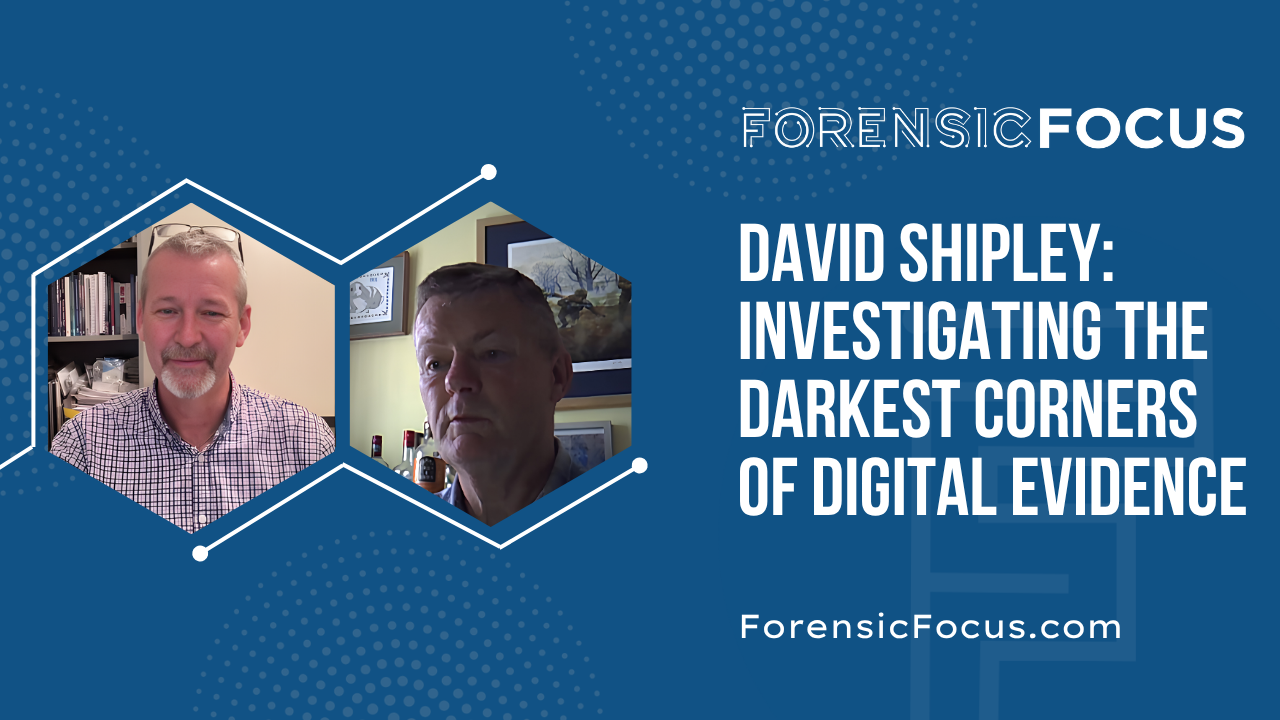
Paul: Today I’m joined by David Shipley, a former investigator who spent 16 years working in online safeguarding and abusive imagery investigations — a role that exposed him to some of the darkest aspects of human behaviour while helping protect countless victims. In his final year of policing, David uncovered a serious gap in UK law surrounding the sexual abuse of corpses, a discovery that led him to launch a campaign that ultimately helped change legislation in this country.
This conversation is about trauma, resilience, policing, mental health, and what it really costs to do this type of work. Some listeners may find parts of this discussion difficult. David, thank you very much for taking the time to join me tonight.
Before we get into the details, what drew you to that kind of specialist work in the first place?
David: It’s perhaps an unusual route in. I joined the police from the military, spent five years as a patrol officer, then joined CID. There was always an expectation that I was going to end up in major crime or serious fraud, or something like that. But I had a real passion for teaching and ended up going to the training school, teaching CID courses, and then volunteered to go to Kosovo for a year to work there with the United Nations.
Whilst I was there, a colleague of mine — a friend — contacted me to say they were setting up a new team to deal with online child sexual offending. It was very much focused on the offenders. I’ll be honest with you, I’d had some experiences in my time with social workers and the problems that can create, and I’d just decided I’m not the person to be working with victims in that way. But she said it was focused on the offenders, and it’d be right up my street, because I’ve always been interested in the psychology of offending — interviewing offenders particularly.
So when I came back from Kosovo, I applied for the job and was fortunate to get it. I was absolutely deluded, thinking there’s not going to be many paedophiles in Kent — I’ll have these boshed out in a few years and then get back on my expected career trajectory towards major or serious crime. That three-year plan became a 15-year plan, which extended to a 16-year plan, and in the end it was a failed plan, because every stone we overturned just revealed more and more.
Paul: That’s really interesting, because some people who enter this work have an idea that they can completely stop this type of offending, and then they get into the investigations and suddenly realise it’s massive.
David: It’s unbelievable. One of the rapid changes I made when I joined the team and took over as the sergeant was to discuss with my senior managers the fact that we never publicised the cases. The prevailing thought was that it would scare the public. My argument was that we need to wake the public up to exactly what’s going on, for a whole variety of reasons. Fortunately, we did decide to change our strategy on that.
I was fortunate, being in Kent Police, that we engaged a lot with technology and with universities, to look at how we could improve rather than just being a response team to referrals. At the same time, it was a perfect storm. Social media companies were starting to get their act together in terms of referrals — not necessarily in terms of preventing it in the first place, and they’re still not. So while all that was happening, we were working with whoever could bring something to the table to ask, “How can we go after this problem?”
Just to give you an example: when I took over as the sergeant on the team, back in 2007, I’d been there for a year, and I think we executed 52 warrants that year. We patted ourselves on the back — “That’s a warrant a week, that’s not bad going.” By the time I left and moved on to other roles within the department, the most recent figure I counted, I think in 2021, was in excess of 270 warrants in a year. Given there are about 260 working days in a year, that demonstrates how things had changed. And at no point did I ever feel we were getting on top of things. There was no light at the end of the tunnel.
Paul: To execute that number of warrants in connection with this type of crime, by one team, is a superb effort by all those involved.
David: Absolutely. I was the sergeant — I pointed everybody in the right direction, and while I went out on a lot of warrants, they were the ones doing the work. The warrant is almost the easy bit, because you go out, you execute a search warrant, you destroy some family’s life — which is one of the hard things to deal with. But then the digital forensics unit have got to cope with the amount of work coming to them, and they’re not increasing their resources at the same time. And then there’s all the background work that takes the time and effort. The warrant is the easy part of the process, in reality.
Paul: You’ve touched on something important — the background work involved in these investigations. Not only are your investigators doing the further investigation from their side, but the devices they seize go to the DFU. And because you’re executing so many warrants per year, that workload has a knock-on effect, building up within the digital forensic unit as well.
David: And we have to remember we’re not their only customers. They’re not just sat there twiddling their thumbs waiting for the unit to bring another bag full of hard drives — they’ve got everybody else’s work to deal with too. In Kent, we always had a process where grading was done by the officer in the case, but there’s still the extraction and interpretation that has to be done.
A long time ago we had to really battle with the idea that you can’t do everything. There has to be some robust decision-making, because if we said, “Right, let’s just download everything from everything we’ve seized,” the system very quickly crashes.
Paul: That’s physically not possible, is it? So you have to make the decision, looking at what you suspect are the main devices each offender is using, and submit those.
David: That’s part of the investigation, and part of the interview skills of the officers involved. It’s never a decision that sits on its own — it’s based on the intelligence, the interview, the initial examination. We have to be sensible about it, because that way hell lies. A lot of the problems forensics units got into in the past came from this terrifying idea that you might miss something.
Having looked at hard drives containing hundreds of thousands of images, the idea that I’m not going to miss something is ridiculous, because I’m a human being with a human being’s set of eyes and a human being’s ability to spot things. So even with all the forensic techniques in the world, stuff is going to get missed.
Paul: Did that thought ever weigh heavy — the thought that you might miss something important?
David: Not really, no, because the decision-making process wasn’t just, “Oh, we’ll do the main hard drive.” It was made by really considering everything else, and it’s not a decision made once. If you think there’s going to be something there, and it’s not where you think it’ll be, then we have to revisit our strategy.
As long as you’ve done everything you can do and can justify it, it’s no different to house-to-house enquiries in a street where a crime has happened. It’s no different to a scenes-of-crime officer who goes into a house to take fingerprints. Do they lose sleep because they didn’t fingerprint the kettle the offender might have picked up to make himself a cup of tea? It’s based on lots more information than just the basics. There was lots of stuff that was going to weigh heavily, so you have to choose which weights you’re going to carry — and that wasn’t going to be one of them.
Paul: I know that feeling. You said in the post I read on LinkedIn that you’re really proud of having helped protect many children and others throughout your career. Can you give us a sense — without identifying individuals — of what that protection looks like in practice?
David: It ranged. We were quite strict in my unit about what we considered a safeguarded child. There’s a safeguarded child in the sense of — right, we’ve done a warrant relating to sex offences, we’re going to put a safeguarding referral in. Technically that’s a safeguarded child, because social services will be involved, and we did that all the time. But the ones we really considered safeguarded were where the child was being abused, or where they were living in a premises with an offender who was saying, “I am going to abuse this child.”
They were the ones we took pride in, because that’s the real heart of the job. We’re not just image counters — we were trying to identify the children. When I retired, the guys’ gift to me was a big bell jar of wooden hearts and hands. There were 234 in there, one for every child we had safeguarded from abuse, or from the threat of abuse by a person who said they were going to abuse them.
Those things are your reason for doing what you’re doing, because there are times where it’s hard, as you know. The kids where you recognise you’ve made a difference — not always the immediate difference we sometimes hope for, if I’m honest — those kids are the ones that bring you back to work the next day.
Paul: That must have been a really moving moment, to receive that jar with that many hands in it.
David: Yeah. People who know me will know I’m not an emotional person, but it was emotional — leaving a job I’d been doing for so long, finally getting to that end. I think the hardest 20 yards I’ve ever walked in my life was from my desk to the DI’s office to hand my warrant card in. If someone had put something in my way, I’d quite happily have sat down and stayed. But I had to leave. With the work on the David Fuller case and everything else, I don’t think I would have been a healthy person if I’d stayed any longer.
Paul: I can relate to that myself. At the end of my career, the cumulative exposure to the material we were dealing with took its toll on me.
David: It’s impossible for it not to. You can have all the strategies in the world. Some people give ideas — you shouldn’t do this, you shouldn’t do that. We were very flexible in our team about how people managed things, but we always insisted grading is never done on your own. There’s always someone there — we were quite strict about that. But all of it has to weigh on you, because you’re seeing things you can’t talk to people about. People don’t need to know it; you don’t need to share that horribleness with them. So where does it go? It has to find somewhere in your brain to sit and rest.
Paul: For me, it was very much internalised. I was a DFI — I spent 30 years in Northumbria, 14 as a DFI — and never once did I come home and talk to my wife about what I did that day.
David: It’s impossible. I love my wife to bits, and she looks forward to me getting home so she can tell me about the latest scandal at work or whatever. But I remember vividly that the last thing I did before I left the office one day was read a victim impact statement on a case — still one of the worst you can imagine ever dealing with, but a really good investigation. I took a lot of risks with some undercover work, and that was when I had the most sleepless nights, just waiting for the bait to be taken.
I read the victim personal statements of the children before I came home, and I have no idea how I got home. Fortunately it’s a dual carriageway mostly. I got home, don’t know how I got through the door, sat on the stairs, and cried my eyes out. My wife came — it was a shocking arrival for her — and all she could do was stand there, not knowing what to say. There’s no way of discussing it, and you shouldn’t have to. That was a stupid error by me, reading it then. If I’d done it earlier in the day, I’d have sorted myself out by the time I got home. But that’s just how the court case ran that day.
Paul: From a mental health perspective, what was available at the time at Kent?
David: We went on a bit of a journey. To start with, we had mandatory six-monthly individual referrals. You had to go — you didn’t have to engage, but you had to go. And we had mandatory six-month team referrals too, so three months after your individual one, you’d do a team one. Every three months there was something. The team referrals were, “Right, we’re going to talk about our welfare, but we’ll also have a bit of CPD-type training.” If I’m honest, it became a whinge-fest about the bosses, with a free dinner included.
Eventually those drifted off, and it became six-monthly referrals you had to attend, which I thought was best practice. Then, in line with a lot of units around the country, a decision was made that it would become an online questionnaire, and you’d only get a face-to-face if you needed it. We fought hard against that, but it was a losing battle. A questionnaire — anyone who’s done one knows what to say. There was always a fear that if you said the wrong thing, you’d lose your job.
Paul: I was going to ask that — were people afraid of filling in the questionnaire? Investigators who do this job are highly skilled, and they really have to want to do it. There’s only a certain type of person who’s resilient — I don’t like to keep using the word resilient — but strong enough to do that work.
David: Well, the commonest thing you hear, because we worked the whole county, is people saying, “Oh, I couldn’t do your job.” And I get it. But equally, I couldn’t do theirs. I’ve been on murder investigations and never brought a body back to life. You deal with a burglary and rarely recover the property, and even if you do, the house is still violated. But if you identify a child and stop that abuse, you can genuinely change a life. I didn’t realise at the time that you also change offenders’ lives — that came as a realisation later.
You absolutely have to want to do it, and recruiting is hard for that sort of job, so you do have to look after them. But there was a genuine fear among people. They love the job, they’re engaged and enthusiastic, absolutely devoted to it, and they’ll move mountains for you. But if treated wrongly, they’re terrified that if they say the wrong thing or show a bit of emotion, someone might say, “Oh, perhaps it’s time for you to move on.” Actually, we should be encouraging people to say, “Yeah, I’ve had a shit day, I hate the world — but give me an hour to go for a walk in the countryside and tomorrow I’ll be right as rain.” Giving them that opportunity — sometimes I don’t think we got it right, that’s for sure.
Paul: I’d agree with that. Going back to when you switched from six-monthly face-to-face contact with a counsellor to the online questionnaires — the clinical, psychometric ones — did you see any change in the wellbeing and welfare of your investigators?
David: It’s difficult to put a label on that being the thing, partly because it was also around the same time as COVID, and we ended up with a hybrid working process, although in that line of work it’s quite difficult to achieve. But certainly, at the same time, the volume of referrals and images was becoming very difficult to manage. What I did notice — it’s quite difficult to describe — is that people started looking inwards to themselves, keeping themselves to themselves rather than being the supportive team. That was a real challenge to spot. I don’t have the greatest emotional IQ, so sometimes I’ll identify what happened that day at three the following morning.
By the time that change happened, I’d reached a stage where I was already well on top of managing my own welfare — I thought I was, at least. So I quite happily answered those questions honestly, because there’s nothing you can say to me now that I don’t already think about myself. At the same time, we were recruiting heavily, having to change the parameters for who could be recruited. So there were people coming into the team who’d never had the experience of the mandatory one-to-one sessions — it was no different to them.
David: I was genuinely the poster boy for Man Up. I joined the police from the army, and I joined the army in the infantry because it was a less violent lifestyle than my home life. So at the time it was very much, big boys don’t cry. When I joined the unit — welfare, whatever, don’t need that. And, God bless her cotton socks, a lady called Sue just sat there and listened to me, and I came away thinking, “Actually, that was worthwhile.” In the space of one session, I went from the poster boy for Man Up to thinking, “This stuff can work. This is useful. We need to embrace and support it.”
Paul: That’s a significant change after one session.
David: It was. And I don’t think she barely asked me a question, to be fair. She just sat there and listened to me talk about how I was feeling.
Paul: I don’t know how she did it.
David: I think she drugged me or something. It must have been counselling magic — witchcraft, I’d have called it at the time.
Paul: So David, your final year on the job was spent on a high-profile double-murder inquiry, investigating sexual abuse as part of that case. Without going into too much detail, can you tell us what it was like to end your career on something of that scale and gravity?
David: My initial role was soon after he’d been arrested in the December. They did the first forensic examination after they’d found the printed images and uncovered the evidence of the sexual abuse of corpses in the mortuary. Because I’d been instrumental in developing processes for managing large amounts of digital media on the child abuse side of things, I was asked to give an idea of the strategy to employ. I had a look at the images and the scale of the problem, and it was immediately apparent that the people in the unit were best placed to do this — well-versed in cataloguing images and so on. The senior leadership agreed.
My next thought was, “Who am I going to get to do this?” I wasn’t sure I could do it myself, and if I’m not sure I could do something myself, then there’s no way I’m going to give it to somebody else. So I took the decision that I would take responsibility for doing it. To put some context to that: we know how to deal with child abuse material — it’s shocking and horrific, but we know how. I’d had experience of officers who, in the course of their work, found animal abuse, and I’d seen the difficulty they had dealing with that. My own personal mindset is, I’ll look at anything, I’ll read anything, if it means I can save a child. But when you’re looking at something that’s not the same, it’s really difficult.
So I thought this would be the same situation, and there’s no way I could ask anybody else to do it. I made the poor decision that I’d also continue managing my team. So I’d execute warrants in the morning and manage them, and then from about 12 o’clock every day until about eight every night, I’d be cataloguing the material. In hindsight that was a poor decision, because no one was allowed to know what I was doing, so the team felt I was abandoning them. That created issues, and it wasn’t good for me to have to deal with that.
I ended up doing that until my retirement as a police officer. Then, literally the day after, I rejoined as a civilian investigator to continue that specific job full-time. The benefit of that was huge — it meant I could work in the building with the major crime team who were part of the investigation, rather than being sat over in the unit’s office, trying to keep a foot in two camps.
Paul: What you’ve just said speaks volumes about your dedication to the work and to this specific case — to retire as a police sergeant and come back the following day as a civilian investigator to see it through to the end.
David: It was necessary. It was an unfinished job, and I could never have walked away from it. I ended the work literally as I finished the last set of images — I think I had about two days to spare. I just topped and tailed everything. I don’t even know if they found any more images after that; I know there were some problematic hard drives. But I didn’t want to walk away and leave someone else to pick up. And, without being gruesome, I recognised things. If I saw a small part of a body, I’d know it probably belonged to this lady or that lady. Over time, it’s not knowledge you necessarily want to carry, but it was a necessary part of it. Someone coming in fresh wouldn’t have that.
Paul: And of course it secures the continuity of the investigation as well, doesn’t it?
David: Absolutely. There was a fairly robust decision made by the senior leadership team, supported by me, that this was not a job we should be spreading around. Partly because of the issue I mentioned — you start to recognise people — but also, how many people do you want to expose to this? There were people inadvertently exposed, because of the way he’d managed his hard drives. He would recycle a hard drive, and there’d be detritus from the mortuary material elsewhere that other people ended up seeing, and then I’d immediately get a call: “Can you come and look at this? Is this one we already know about, or a new batch?” He had a lot of indecent images too. I was initially going to deal with those, but the numbers were insane, so I enlisted someone else from the unit, got permission for them to be written into it and sign the NDA. But by the nature of that, they then saw some of the mortuary material. So we were already building up the numbers of people exposed far more than we wanted to.
Paul: Can you tell me about the moment you realised that some of what you were viewing wasn’t actually illegal?
David: The first thing I did when I started was — well, if you were dealing with child abuse images, you’d be an absolute muppet to start dealing with it unless you understood the law, as to what’s illegal or not. The same applied to the mortuary material. I had an idea of extreme pornography legislation, because we see that in the course of paedophile investigations, but I didn’t really have much idea of necrophilia legislation.
So I always tell people: if you’re not sure, pick up a law book and read it. I read it, and I thought, “Hang on a minute, this only talks about penetration. That can’t be right — perhaps it’s the next section.” So you click over to the next section, and it’s, “Oh, okay, that’s it then.” From my CID training days, I always taught people that if you’re unsure about a law or confused, go back to the Law Commission and find out what their reports said and the reasoning behind it.
So I did that, and it turns out that when the Sexual Offences Act 2003 was first envisaged, they had a conversation as to whether they even needed an offence for necrophilia. They weren’t sure, but decided to slot one in just in case. That, I guess, explains the poor drafting of it. You realise it’s just penetration, and as I went through with that knowledge, I realised he was doing a lot of stuff that was appalling and disgusting — if it was against a living person, you’d absolutely be locked up. And you realise he’s not doing anything that’s actually illegal.
Then you think, “This can’t be right.” But it is what it is. So you catalogue it, you count it, you describe it, and then you identify those that are evidence of the Section 70 offence, and you identify all the things he’s doing that are evidence of repugnant behaviour but not actually a crime in themselves.
Paul: Having spent 16 years helping protect people, many of them children, did it feel different discovering this gap of protection that effectively wasn’t afforded to adults after death?
David: It was a shock. Everything about it was a shock — I was not prepared for what I saw. I was aware, because we see it occasionally in the downloads from some warrants, that on very rare occasions there’d be a mortuary picture. But it tends to be just someone on a slab, or someone having the examination — I can’t remember what the cut is that they call it. Never anything sexual. So you have a dim idea that someone might be taking photographs, but not of this nature.
It was totally different. Shocking that it could happen, shocking that it wasn’t against the law, shocking that he was able to do it without any apparent fear of being caught. And you think — these are our most precious people. They’ve lived their lives. We have this tried and tested thing where we say “rest in peace,” and it means the same, or something similar, to all of us, doesn’t it?
Paul: It does. When you left Kent Police, you launched a campaign to make all sexual abuse of corpses illegal, and you were starting from scratch — no political connections, no campaigning experience. What made you decide to do this?
David: I’m simply a person who, if something needs doing and no one else is going to do it, gets on and does it. Don’t just wait. It’s interesting to me when I reflect — would I ever have thought I’d do this sort of thing? Sixteen-year-old me, escaping home to join the army, would never have thought I’d join the police, never thought I’d end up on this unit, never thought I’d end up as a sergeant, and never thought I’d end up campaigning to change a law.
So I don’t know how it all transpires, but this was just a case of, well, no one else is going to do it. The police involved can’t do it. It’s apparent that the government can say all they like in Parliament about how it’s an abhorrent case and they’re determined never to let it happen again — okay, so what are you going to do about it? As it turns out, not an awful lot. So someone else has to get on with it.
Paul: During this conversation, the impression I have of you is exactly that — if something needs doing, do it. The decision to catalogue the images yourself rather than pass it to someone else: you’re a senior leader within the force, you could easily have given that to another investigator, but you decided, “No, I’m going to do this.”
David: It was in my gift to ask somebody else to do it, but that wouldn’t have been the right thing to do. As a sergeant, and as a leader in the military, I was never going to ask anybody to do something I couldn’t do, and I’d need to be satisfied that I could do it. That isn’t always the best way of doing things, but especially now, knowing how it impacted me, to have given that to someone else would have been absolutely wrong.
Paul: Your first approach was to the Ministry of Justice. What did you do?
David: It was via my MP. I contacted my MP, Gordon Henderson, and also wrote to the local MP for the area — emailed, using the good processes for contacting your MP — to explain the situation. Gordon Henderson was quite keen, as was Greg from Tunbridge Wells, to help, and said they’d raise it with the Ministry of Justice. At the time I just reiterated the facts as they were known in the story: “This is the news story, you know all about it, you’ve discussed it in Parliament, you were all shocked and disgusted and determined that something was going to happen.”
A long time passes, and then we get a response. Mr Henderson forwarded me the letter from the Ministry of Justice, saying, “Thanks ever so much. We have no plans to change the legislation.” Mr Henderson said, “I realise this might leave you disappointed, but at least you tried something.”
That’s not good enough. I thought, anybody who actually knows the reality of what happened here would not be saying no. So I decided I needed to educate them a little more about the specifics. Without getting too graphic, I told them some of the things that had happened that were not illegal. One of the MPs — I forget which — came back to me and said, “We had no idea this is what actually happened. Let me go back to the Ministry of Justice and explain.” So they went back and educated them the same way I’d had to educate them.
Then a letter follows: “Okay, thanks for the extra information, we’ll reconsider — we’re now considering it.” A few months later they write, “We’ve decided we’re going to change the law, with support from Tracey Crouch, as an amendment.” It was in a policing bill, ready to go through all the processes, and then Rishi Sunak called a general election, and it failed to get into what I think they call the wash-up, so it got binned. Then Labour wins, so we’re back to square one — to start again. Although much easier this time, in many respects.
Paul: So this time around, you found support in your new local MP, Mr McKenna?
David: Doing the same thing again, because both MPs had changed. I contacted my MP, and I contacted the MP for Pembrokeshire and South West Wales, who responded saying that because I’m not one of his constituents, he can’t campaign or work on my behalf. I referred to my reply as a robust response, telling him exactly what I thought of him in his position as a parliamentarian responsible for the good of the whole country, not just the people who live in his street. But Mr McKenna was very forthcoming — invited me to see him, I went and met him, explained the situation, and he said, “Yeah, I absolutely agree with you, and I’ll take it up on your behalf.”
The next thing I know, it’s back in the Crime and Policing Bill. Literally every week I’m following the bill — has it got to this stage? What stage? And every month goes by before the next reading. Then you realise, crikey Moses, because it’s such an enormous bill, covering a whole variety of things. I read all the Hansard documents, and they scrutinise every single word. At no point did anyone have anything to scrutinise about the piece of legislation I’d suggested needed to be there, so that sailed through all the readings. It was everything else that slowed it all down.
So I was sat waiting, and then I’m sat at the airport waiting to go to Kraków with my wife, thinking, “It must be through the final committee by now.” I opened it up on my phone and saw — Royal Assent. So I turned to my wife: “The law’s been passed.”
Paul: Happy days.
David: “Can I go and buy a bottle of whiskey?”
Paul: That must have felt amazing — to know you’d been instrumental, the single point of contact who made this happen.
David: If I’m honest with you, no.
Paul: Really?
David: I think the battle took so long that — I need to reflect on this myself — I’d been building it up in my head that this was going to be it: I’ll draw a line under that part of my career, move on, and that’ll be the end of it. And it is the end of it, but it doesn’t feel like a sigh of relief. Perhaps it’s something I’ll get in slow time. Not quite dead inside, but — I’m pleased. I’m pleased, but I wouldn’t say proud. I’m just relieved there’s a success there. But it’s always tempered with the fact that it happened in the first place. I would much rather have been sat on that seat waiting for my plane, not having to think about anything to do with anything like that.
Paul: Just for the benefit of the viewers — how long did it take from start to finish for it to gain Royal Assent?
David: I retired on the 22nd of February. I wrote my first email the following week. It received Royal Assent on the 29th of April this year — so four years, two months.
Paul: Four years of campaigning to change it.
David: I even had a petition, which was a real kick in the whatsits for me. I managed to get 1,000 names on a petition. At the same time, there was a petition I saw on the same page as mine, to bring back a cartoon version of Star Trek. Now, I love Star Trek — I’m a Star Trek person, not a Star Wars person — and that had 240,000 signatures. I struggled to get to 1,000. I thought, “Is it just me? Does it matter enough?” But I decided to stubbornly go ahead anyway.
Paul: I’m very glad you did.
David: But petitions — pfft, it’s tough. I had a dream that I could go marching to Parliament if I got 100,000 signatures and demand that you change the law. But for 1,000 signatures, compared to Star Trek’s cartoon version, it might not be much of a conversation to have.
Paul: It’s often a hell of a lot harder to change the law than anyone envisages, isn’t it?
David: It’s been an education, that’s for sure.
Paul: So in plain terms, what has actually changed? What can happen now?
David: The previous legislation made it against the law to sexually penetrate a corpse — that’s fairly standard English, so I don’t need to explain it further — with a maximum sentence of two years. The judge commented that she’d given the highest sentence she possibly could, but was constrained by that maximum.
The way it’s changed now — I suggested they needed two offences: one of penetration, and one of any other sexual activity. The way I put it to the MPs was that if it would be illegal to do it against a living human being without their consent, then it should be illegal to do it to a dead body, where there’s clearly no consent. So the law as it now stands, having received Royal Assent, is that sexual penetration now has a maximum sentence of seven years — an increase of five years.
Paul: Wow.
David: And a new offence of other sexual activity with a corpse, with a maximum sentence of five years. That’s the offence that never existed before, and it covers a good number of the victims where penetration wasn’t necessarily involved. A fairly reasonable sentence.
Paul: So not only has this introduced a new law, it’s increased the sentencing level for the old law as well — from two years to seven. That’s an incredible achievement.
David: It’s just so wrong, isn’t it, that they had this idea they weren’t sure the legislation was needed, but stuck it in anyway. You think to yourself — you must have had this conversation about sexual penetration of a corpse, and come up with that number of two years. Why do you think two years is the appropriate amount? That always upset all of us on the inquiry when we realised it — really difficult to get our heads around, thinking about the nature and reality of it.
Paul: When you think of a comparable act committed against, for argument’s sake, a woman who was alive, you’re talking eight to ten years.
David: It would be a rape, with a maximum sentence of life. At the very least it’s a sexual assault. There are scales within sexual assault — everyone’s a victim and should be remembered accordingly, but the law recognises differences within that. And these are high-level, really disgusting sexual assaults taking place.
Paul: It’s almost as if, historically, prior to your intervention, when you die you become a lesser victim.
David: Yes. But I think we’ve seen this in other places too, where the law in relation to children hasn’t always been as robust as it is now. It took a long time to recognise that just the possession of indecent images is an offence and is harmful in itself. So it demonstrates that laws are made by people who perhaps — and I don’t mean this as a criticism — can’t envisage this sort of thing happening. We can, because we’ve seen it, and we’ve seen the dark side of the world. We can imagine these things, but it’s probably a good thing that the majority of people can’t.
Paul: I’d agree with that 100%. Thinking about your future — you’ve described leaving the police as an opportunity to give something back, and you’re now moving into training new recruits. After 16 years in some of the darkest corners of this work, what do you most want the next generation of investigators to understand?
David: Number one: look after yourself. From an early stage of your career, have strategies to look after yourself. By the time I left, we were reaching a point where all the news about the police is terrible, and that weighs you down. I’d be driving to work to execute another search warrant, identify another child, and thinking, I am not this person they’re talking about on the radio in yet another disastrous thing a police officer has done. But it weighs you down. So I want officers to have a good strategy for keeping a sense of perspective, and to look after themselves.
The other thing I’m really passionate about is the investigative mindset. I’ve always talked to my staff about asking, “What’s the worst that can happen?” Use that as your starting point to launch into asking better questions, and take the time — which is difficult with resources as they are, and the FCR chirping at you to see if you’re ready for the next call — to be able to stand up and say, “No, I’m not, because I’m not satisfied this person is safe at this moment in time.” Being prepared to push back on that.
Investigative mindset, and being prepared to walk away knowing you’ve absolutely done the best you can do for vulnerable people — while at the same time knowing, and this is a sad reflection, that someone somewhere along the line may well drop the ball. But make sure it’s not you. And at the same time, look after yourself.
Paul: David, it’s been absolutely fascinating talking to you tonight. What you’ve managed to achieve in changing the law around the abuse of corpses is nothing short of fantastic, and you should be fully commended for it.
David: Thank you. It’s very kind.