The Workflow Should Not Be Sold in Pieces
Whose idea was it to split investigative capability across licences, modules and bolt-ons?
Every extra tool adds a question before the review has even properly started.
Do we have that capability? Have we bought that add-on? Is it available to this team? Does the investigator know where to find it?
That is not clarity. That is friction.
Of course, specialist capability matters. Investigators need tools that can support high-volume image and video analysis, visual review, prioritisation, grouping, similarity, intelligence-led workflows and victim identification activity.
But when those capabilities are split across multiple products, the investigation inherits the complexity.
The evidence may be difficult enough. The tooling should not make it harder.
Bolt-Ons Create Operational Drag
Capability that sits behind an additional licence is not always capability the investigator can rely on in the moment.
When review depends on separate modules, extra purchases or connected products, teams are forced to manage the toolchain before they can focus fully on the material.
That creates drag. Not always dramatic. Not always obvious. But real.
A workflow becomes slower when investigators have to check where a capability lives. It becomes less efficient when material has to move between tools. It becomes less clear when different stages of review depend on different licences, permissions or product boundaries.
The danger is normalisation. Teams get used to workarounds. They get used to fragmented review. They get used to asking whether the capability exists somewhere else, instead of expecting it to be available where the evidence is being assessed.
That should not be the standard.
The Buying Criterion Has to Change
The question is not simply, “Does this vendor offer the capability?” The better question is, “Is that capability available inside the review workflow when investigators need it?”
Because there is a difference between a supplier being able to sell a function and an investigator being able to use it without friction.
If a visual review workflow depends on several tools, modules and licences, the organisation may not have bought a clear investigative pathway. It may have bought a chain of dependencies.
That matters in serious evidence environments. Investigators need less fragmentation, not more.
They need review capability that supports the work from the start, not a workflow that keeps asking what has been added, enabled or purchased separately.
The Tool That Keeps Capability Together
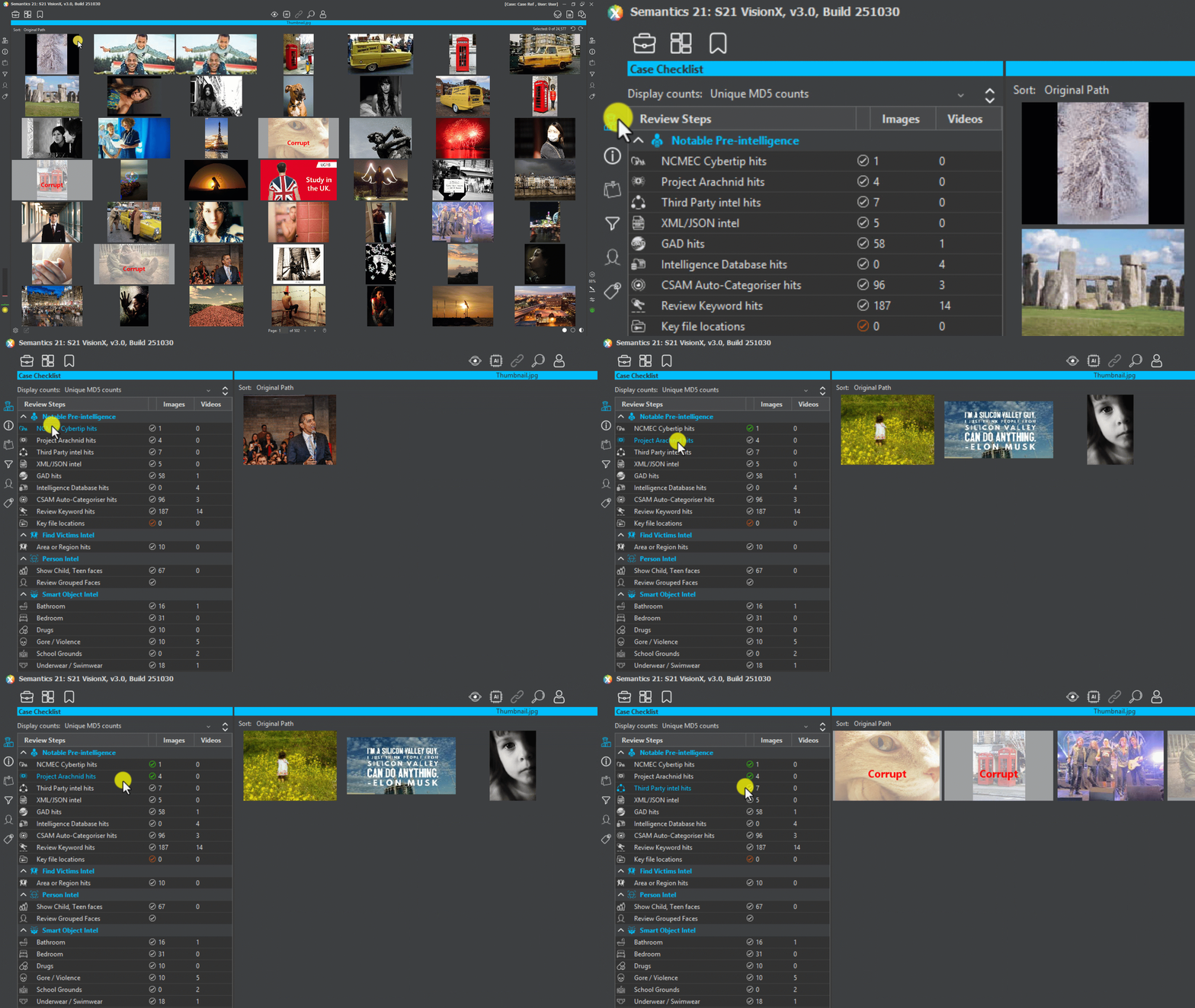
S21 VisionX brings media review capabilities into one intelligence-led platform from the start.
It supports high-volume image and video analysis, visual connections, prioritisation, grouping and victim identification workflows, while keeping professional judgement with trained investigators. It is built for serious investigative environments where volume, sensitivity and review burden matter.
S21 VisionX is offline, intelligence-led and designed to help investigators move through complex visual evidence without managing a chain of bolt-ons.
That distinction matters because the goal is not simply to own more capability. The goal is to make sure capability is usable inside the workflow, where investigators are making decisions, assessing material and following the details that matter.
Capability Should Be Ready When the Evidence Arrives
Investigative review should not begin with licence questions. It should begin with evidence visibility, workflow clarity and investigator control.
When one review depends on several tools, modules and add-ons, the question is simple:
Why has this become the norm?
Interested in Finding Out More?
Click here to email Semantics 21 and express your interest in S21 VisionX.