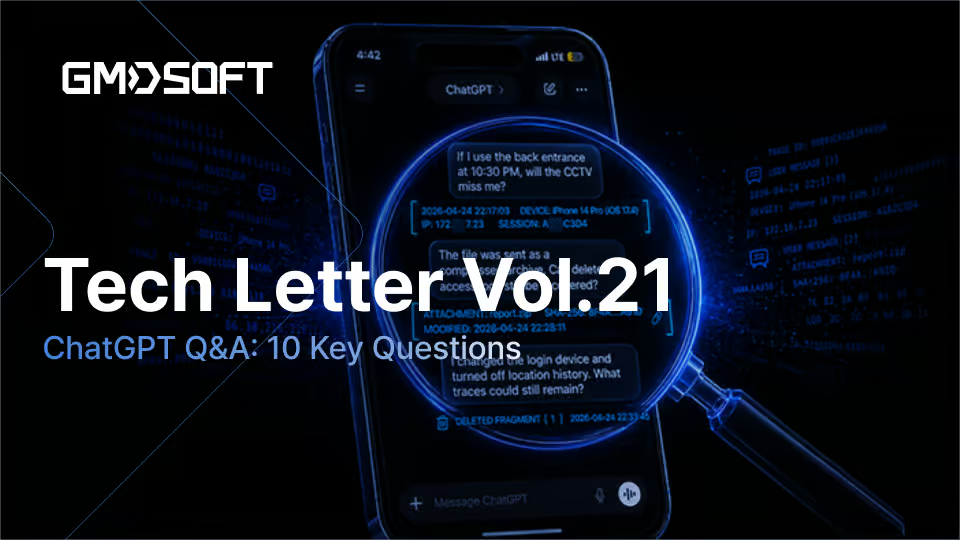
A Google search tells you what a suspect was curious about, but a ChatGPT conversation reveals what they were planning. That single distinction is rewriting the future of digital forensics.
For two decades, search history has anchored digital investigations — flat keywords, timestamps, URLs. Useful, but one-dimensional.
Unlike fragmented search queries, ChatGPT captures a suspect’s reasoning in their own words. How the question evolved. How the plan took shape. How intent hardened into action.
That’s not just data. That’s premeditation, documented in natural language.
And as AI-enabled crime moves from edge case to everyday casework, the examiners who can decode these conversations will close cases the others can’t.
In our latest Tech Letter, we put MD-NEXT and MD-RED to work against real-world ChatGPT scenarios on Android — answering the 10 questions field examiners send us most.
A preview:
🔹 Can deleted ChatGPT chatrooms be recovered?
🔹 Do never-logged-in sessions still leave artifacts on the device?
If your next case touches an AI conversation, the evidence is already on the device.
The only question is whether your tools can pull it.