by Paul Gullon-Scott BSc MA MSc MSc FMBPSS
The 2025 National Police Wellbeing Survey, coordinated by Oscar Kilo and drawing on responses from more than 40,000 officers and staff across 33 forces, offers the clearest picture yet of the psychological health of the policing workforce. The results highlight a service that remains proud, resilient, and deeply committed to its mission, yet is increasingly undermined by exhaustion, workload pressures, cultural barriers, and systemic shortcomings. Psychologically, the findings paint a stark portrait of a workforce operating under chronic strain, where the capacity to thrive is limited not by individual resilience but by organisational environments.
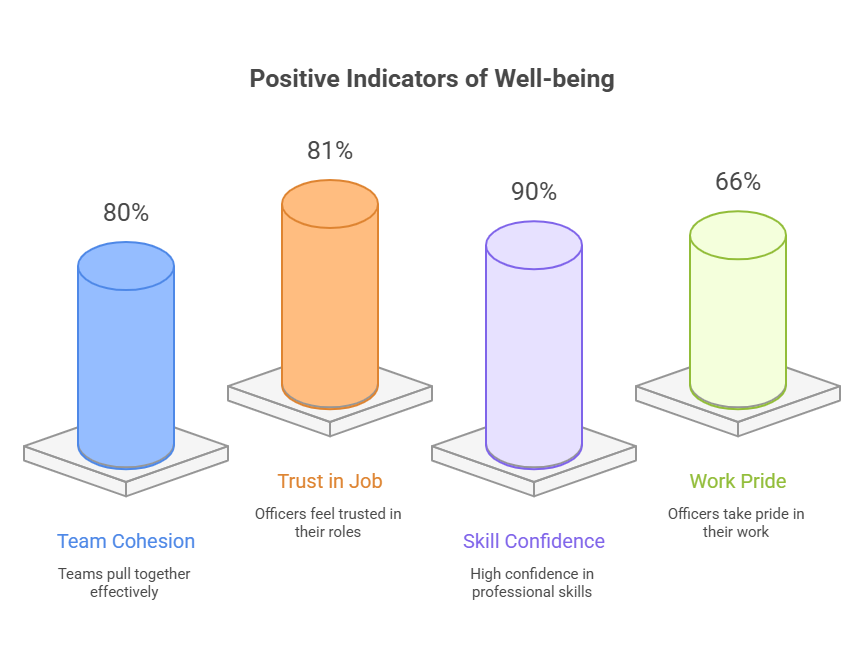
At one level, the survey is reassuring. A strong majority of officers and staff continue to find meaning and purpose in their work. 80% say their teams “pull together,” 81% feel trusted to do their job, and nearly 90% are confident in their skills and knowledge. Two-thirds remain proud of their work, reflecting a deep well of vocational identity and intrinsic motivation.
Exhaustion as the Defining Challenge
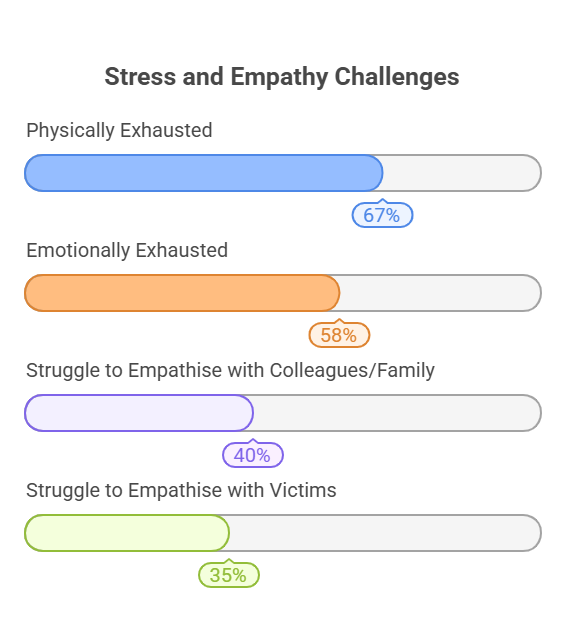
However, despite the above, these strengths are increasingly overshadowed by the defining feature of contemporary police well-being: exhaustion. 67% of officers report being physically exhausted, while 58% describe themselves as emotionally exhausted or burnt out. Such figures are psychologically significant, as sustained exhaustion erodes empathy, decision-making capacity, and emotional regulation. The survey also shows that 40% of officers struggle to empathise with colleagues or family, while 35% report difficulty empathising with victims of crime. From a clinical perspective, this reduction in empathic capacity is characteristic of compassion fatigue and secondary traumatic stress, phenomena well documented in other high-trauma occupations.
The burden of this strain is not evenly shared. Constables, sergeants, and inspectors are disproportionately affected, reporting far higher levels of fatigue, burnout, and financial stress than senior leaders. Nearly 60% of constables report burnout, compared to just 21% of assistant chief constables. These disparities reflect both exposure and autonomy: those with the least control over their workload and the greatest exposure to trauma are the most psychologically vulnerable. This aligns with established occupational stress models, where high-demand, low-control environments predict poorer well-being outcomes.
Addressing Workload and Recovery
Mitigating this imbalance requires organisational change rather than expecting individual officers to simply become more resilient. Effective workload management is essential. Fatigue-aware rostering that ensures adequate rest, protected recovery time between shifts, and role rotation away from high-trauma duties can help reduce the accumulation of stress. Setting clear caseload limits for investigative and frontline responsibilities is equally important to prevent chronic overload. Without such safeguards, officers remain trapped in a cycle of demand that makes recovery almost impossible.
Psychological support must also reflect the realities of policing. Trauma-informed supervision can equip line managers to recognise and respond to early signs of stress in their teams. Structured peer support programmes, adapted for cumulative trauma rather than single-incident exposure alone, can provide safe spaces for officers to process their experiences. Equally, confidential access to professional counselling from clinicians experienced in police trauma is vital to reduce stigma and encourage engagement.
Shifting Police Culture
Finally, the culture of policing itself must shift. Building psychological safety—where officers feel able to disclose stress without fear of stigma or career harm—is essential to breaking the silence that still surrounds mental health. Leadership must take visible responsibility by publishing and reporting on annual well-being commitments, embedding accountability into the organisational fabric. This marks a shift from a culture of endurance, where officers are expected to absorb unlimited strain, to one of sustainability, where well-being is recognised as integral to operational effectiveness.
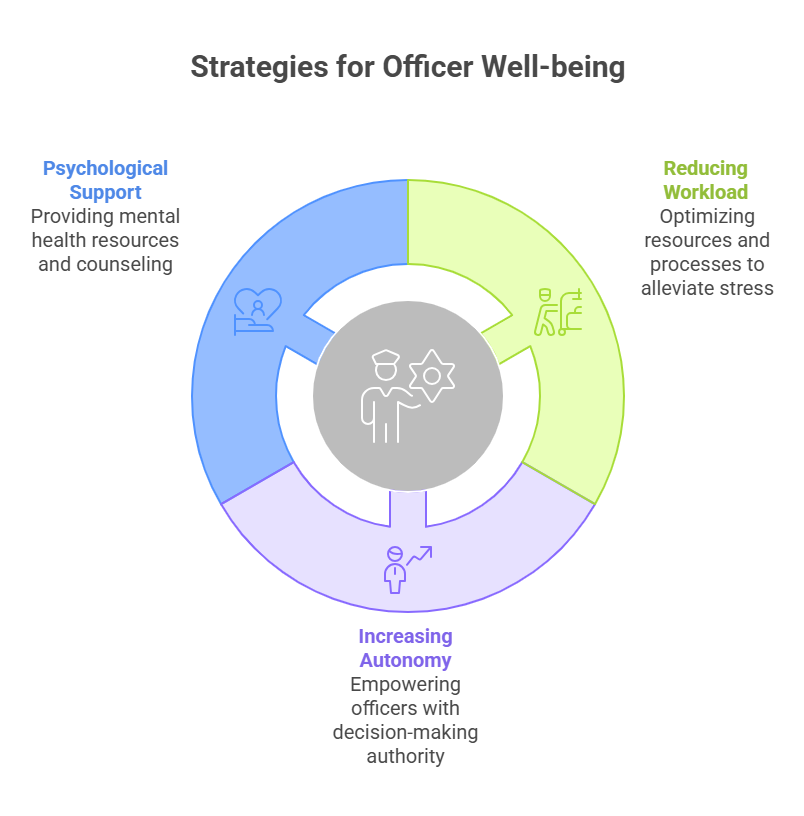
Ultimately, the disproportionate burden carried by constables, sergeants, and inspectors is not the result of weak individuals but of structural and cultural conditions that leave them overexposed and under-supported. By reducing workload, increasing autonomy, and embedding credible psychological support, policing can begin to realign its systems with what occupational psychology teaches about human health and performance. In doing so, it can protect those who shoulder the greatest demands of the job and ensure the workforce as a whole is healthier, more sustainable, and more effective.
Frontline and Role Pressures
Role differences are equally striking. Visible frontline staff report exhaustion at double the rate of business support staff, while non-visible roles such as digital forensic officers also report high strain, with 57% physically exhausted and 46% burnt out. The common denominator is exposure to trauma and sustained operational pressure. These findings mirror research across other frontline services, where direct contact with trauma and high-intensity workloads consistently predict burnout.
Time pressure is another defining psychological stressor. Nearly 70% of officers report facing unrealistic time demands, and three-quarters struggle to take sufficient breaks. Chronic time pressure not only drives exhaustion but also undermines recovery, decision-making, and cognitive functioning. Cognitive load theory suggests that excessive demands impair both working memory and executive function, which, in a policing context, increases the risk of error with direct consequences for public safety.
Systemic Shortcomings and Support Gaps
Beyond workload, systemic organisational shortcomings exacerbate strain. Outdated IT systems, gaps in training, and weak managerial support create environments of frustration and helplessness. From a psychological perspective, such systemic failures foster learned helplessness, where individuals perceive limited capacity to influence outcomes, thereby intensifying stress and disengagement.
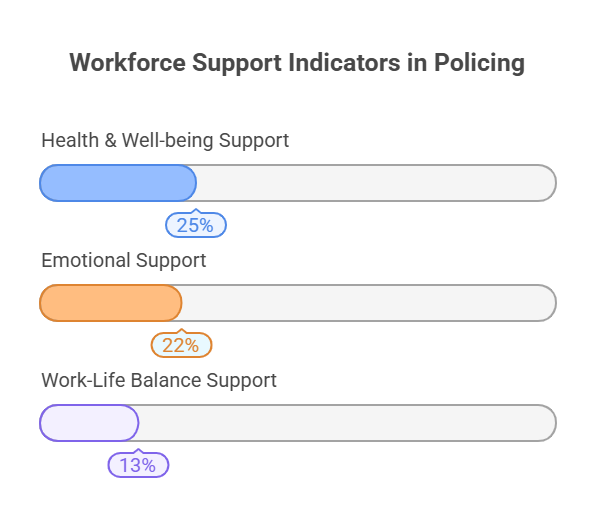
Perhaps most concerning is the mismatch between need and support. Only a quarter of officers feel their force provides good support for health and well-being, and just 22% feel supported through emotionally demanding work. A mere 13% believe their force helps them balance home and work life. These figures illustrate an organisational support gap: those most in need of structured psychological provision are least likely to feel they receive it. Research shows that perceived organisational support is strongly linked to lower burnout and improved well-being. When this support is absent, resilience erodes and attrition increases.
Cultural barriers further inhibit psychological safety. The survey reveals low confidence in senior leaders, with many officers feeling unable to raise concerns or admit vulnerability. This lack of psychological safety perpetuates silence, deters help-seeking, and undermines organisational learning. Alongside this, 16% of staff report experiencing bullying or harassment, with higher rates among minority and vulnerable groups. Such experiences are well-established risk factors for anxiety, depression, and disengagement—particularly when unaddressed. Low reporting and satisfaction rates with responses to bullying highlight the corrosive impact of unresolved harassment on mental health and workplace trust.
Attrition and Mistrust in Support
The psychological consequences of these cumulative stressors are not confined to individual well-being. They manifest in attrition: almost a third of the workforce is considering leaving policing within a year, driven by workload, pay, and leadership concerns. From a psychological contract perspective, this reflects a breach between what staff expect of their employer and what they experience in reality, fuelling disengagement and intention to leave.
Even where formal structures exist, they are often mistrusted. While most staff know how to contact occupational health, fewer than half find it useful, and only a quarter would actually use it for trauma or burnout support. Research shows that occupational health is often perceived as serving organisational interests rather than individual well-being, reinforcing fears of stigma and career harm. Similarly, HR is widely perceived as a compliance or disciplinary function, leaving staff to rely on line managers and peers, who themselves may lack training in trauma-informed care. This creates a dangerous mismatch between need, trust, and competence.
A Warning and a Roadmap
Taken together, the survey provides both a warning and a roadmap. It demonstrates that well-being in policing is not primarily a matter of individual resilience, but of systemic, cultural, and organisational conditions. Psychological strain stems less from inherent vulnerability than from environments of chronic demand, inadequate support, and weak psychological safety. The way forward requires action on multiple fronts: fatigue-aware rostering, modernised infrastructure, comprehensive trauma-informed training, leadership development focused on psychological safety, safe channels for reporting bullying, and targeted interventions for lower ranks and frontline roles.
Ultimately, the 2025 Oscar Kilo Wellbeing Survey underscores a critical truth: well-being is not a soft issue or a private concern but an operational necessity. The psychological health of officers and staff is inseparable from the effectiveness and integrity of policing itself. By acting decisively to close the gap between organisational rhetoric and lived experience, policing can turn well-being from a vulnerability into a strength.
Paul Gullon-Scott BSc MA MSc MSc FMBPSS is a former Digital Forensic Investigator with nearly 30 years of service at Northumbria Police in the UK, specializing in child abuse cases. As a recognized expert on the mental health impacts of digital forensic work, Paul now works as a Higher Assistant Psychologist within the NHS and is the developer of a pioneering well-being framework to support digital forensics investigators facing job-related stress. He recently published the research paper “UK-based Digital Forensic Investigators and the Impact of Exposure to Traumatic Material” and has chosen to collaborate with Forensic Focus in order to raise awareness of the mental health effects associated with digital forensics. Paul can be contacted in confidence via LinkedIn.