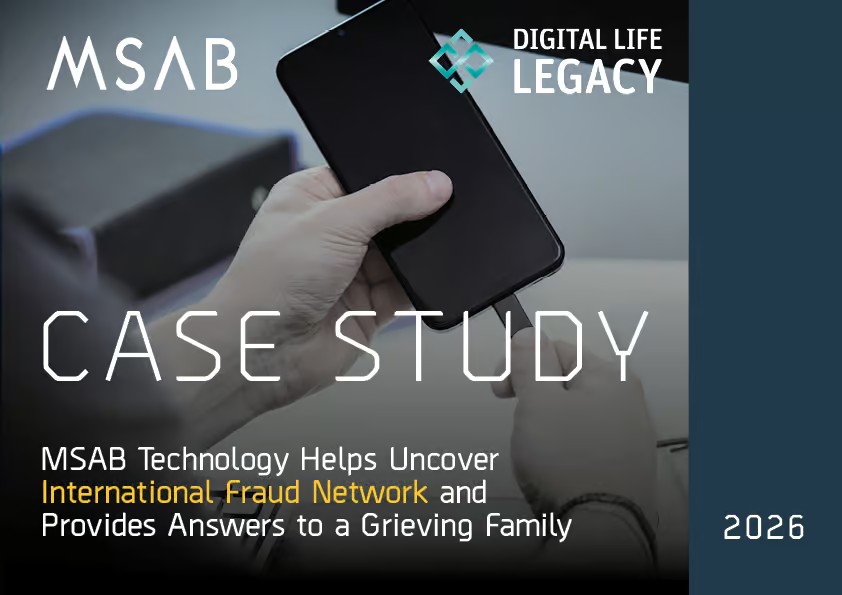
After a woman died by suicide, her family was left with unanswered questions. As there was no indication of a crime, the police had no grounds to investigate further.
The family believed her tablet might help them understand what she had been going through, but it was locked with a passcode.
Digital Life Legacy (DLL), an organisation that helps families access digital assets after someone has died, was supporting the family. DLL was then approached by Kees van der Spek Ontmaskert, a Dutch television programme that investigates fraudsters, to look into the case further.
The Challenge
The tablet could hold crucial evidence. Without access to it, neither the family nor the investigators could know what had happened in the time before her death.
DLL needed to get into the device safely and secure its contents as evidence, without altering any of the data.
The Solution
DLL examined the tablet using XRY Pro and BruteStorm Surge from MSAB. Together, they made it possible to access the locked device and extract its data in a forensically sound way.
Once inside, the investigators used XRY Pro to analyse the messages, communications and other digital traces stored on the tablet.
The evidence showed that she had been targeted over a long period by organised internet scammers, who had manipulated and exploited her. The findings from the tablet became the foundation of the investigation.
Her communications revealed a direct link to an organised fraud operation that had targeted her over a long period.
Using these leads alongside traditional investigative work, the investigators and the programme’s producers traced the scammers across borders to Benin, in West Africa.
It emerged that the scammers had met several years earlier in prison, where they were serving time for internet fraud.
Police in Benin made three arrests, and those arrested are expected to be sentenced to 10 to 15 years in prison. The case was covered by the press in Benin. For the family, access to the tablet brought answers about what she had been subjected to.
For investigators, the case shows how mobile forensic technology can uncover crucial evidence, even when getting into a device at first seems impossible.
About Digital Life Legacy (DLL)
Mission
Digital life legacy aims to raise awareness of digital legacy. The goal is to make all dutch citizens aware of their digital assets, so they can transfer them to their descendants in a timely and proper manner.
Vision
The vision is that in the future, people will have control over their international digital legacy, both during their lifetime and after their death. Ownership of both equipment and data will be transferred to the legal heir, if that is the person’s wish.