Outdated Tools Are Asking Too Much of Investigators
Times have changed. It is time to question whether your outdated tool is still adequate.
Digital evidence is larger, messier and more complex than ever. Many investigative tools have not kept the same pace.
Investigators are now expected to work across growing volumes of evidence, often under pressure, to move faster while maintaining confidence, control and professional judgement. That is a difficult enough task without the tool adding extra weight.
Too many workflows still make investigators do the hard part manually – open it, watch it, listen to it, search for it, describe it, verify it and work around whatever the tool does not show.
That is not a modern investigative workflow. It is skilled people compensating for systems that were not built for the current evidence reality.
The Work Has Changed. The Baseline Has Moved
The old standard was whether a tool could process the evidence.
Could the tool open the material? Could it list the files? Could it categorise the content? Could it produce something for review?
That is no longer enough.
Modern investigations need more than access to evidence. They need visibility inside it. They need searchability across it. They need prioritisation before the queue becomes unmanageable. They need transcription that brings spoken content into review. They need CCTV workflows that help teams get from footage to usable material faster. They need visual review tools that support victim identification workflows, not just categorisation.
And through all of it, judgement must stay with trained investigators.
Technology should reduce unnecessary burden, not move accountability away from professionals. When tools force skilled teams to compensate for limited visibility, fragmented workflows or manual-heavy review, the pressure stays with the investigator instead of being reduced by the system around them.
That should not be accepted as normal.
Semantics 21 Tools Are Built for Modern Intelligence-Led Investigations
Semantics 21 tools are built for the evidence reality investigators are already facing.
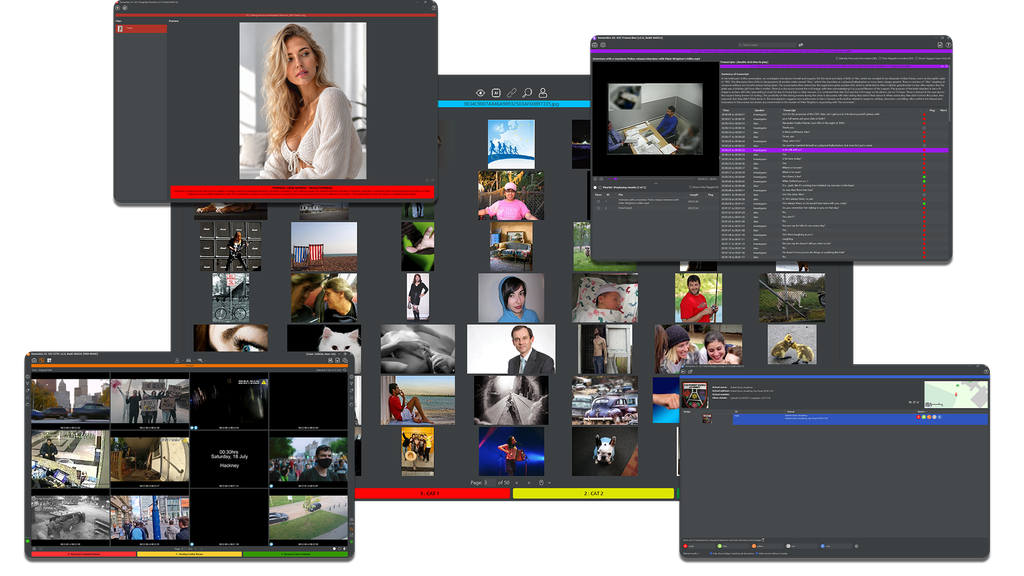
From victim identification and media review to CCTV analysis and transcription, Semantics 21 helps teams work through complex digital material with greater speed, clarity and control.
S21 VisionX supports large-scale image and video analysis, prioritisation, grouping, visual connections and victim identification workflows.
S21 CCTV supports frontline and specialist teams reviewing time-critical video material.
S21 Transcriber turns spoken audio evidence into searchable, reviewable material.
Together, these tools reflect a simple point: modern investigations need connected capability, not outdated workflows patched around modern evidence volume.
The Excuses Have Expired
The right tools should help investigators see more, search faster and prioritise earlier – without taking judgement out of their hands.
That is the new investigative baseline. Not because technology replaces investigative skill, but because investigative skill deserves better support.
The excuses for staying with an outdated solution have officially expired.
Interested in Finding Out More?
Click here to email Semantics 21 and express your interest.