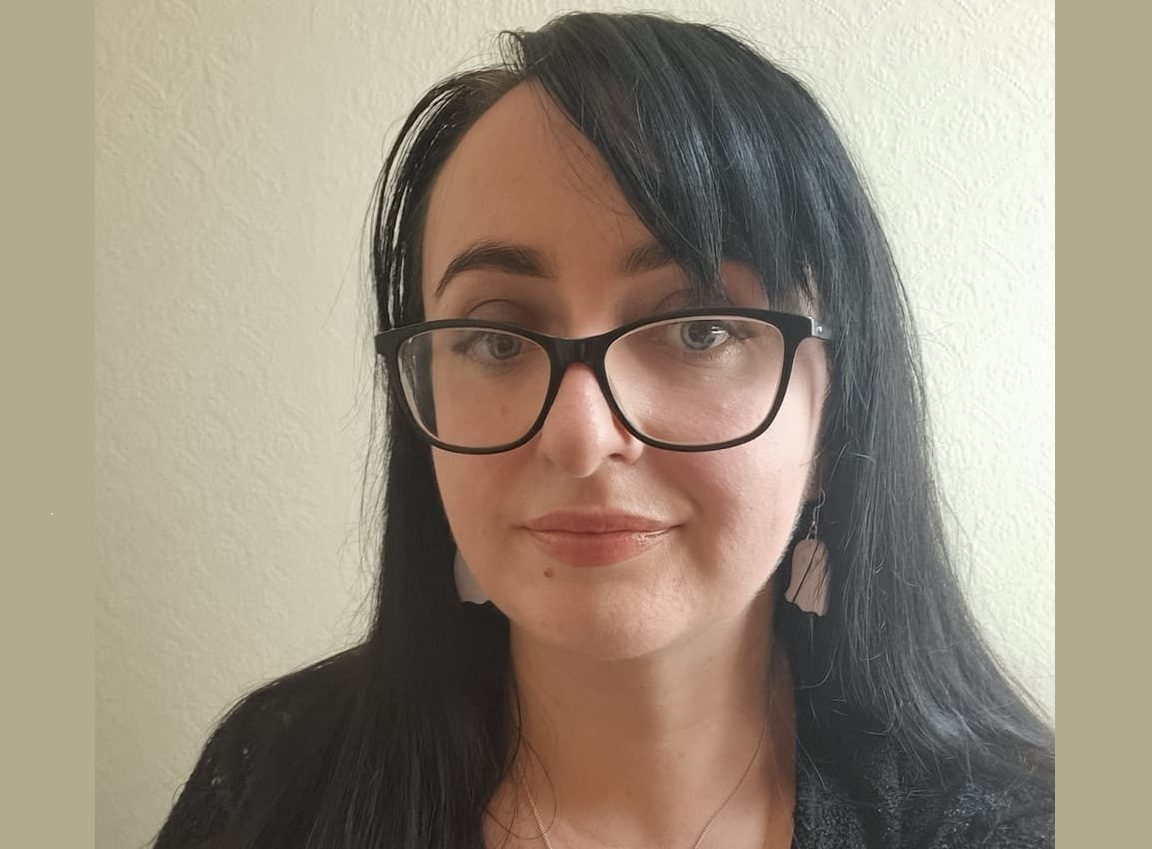
Dr. Áine MacDermott is a Senior Lecturer in Cyber Security and Digital Forensics at Liverpool John Moores University. She is currently leading the Deepfake Forensics Survey, a project designed to gather practitioner input on the challenges deepfakes pose to digital forensic investigations.
Tell us about your background and current role as a Senior Lecturer in Cyber Security and Digital Forensics at Liverpool John Moores University.
I am a Senior Lecturer in Cyber Security and Digital Forensics in the School of Computer Science and Mathematics at Liverpool John Moores University, a position I’ve held since 2017. I hold a BSc (Hons) in Computer Forensics and a PhD in Network Security, and I’ve been actively researching cyber security and digital forensics for nearly 15 years.
I teach across both the digital forensics and cyber security programmes at LJMU, with my academic work covering a wide range of topics including forensic evidence handling and methodologies, device and IoT forensics, network and technology security, and more recently, the forensic analysis of fabricated media such as deepfakes. I’m passionate about research-informed teaching, and committed to preparing students to address real-world cyber threats with confidence and critical insight.
My research is driven by a desire to advance both the theoretical and practical dimensions of digital investigations in an increasingly complex threat landscape. I also actively contribute to public engagement and knowledge exchange. In 2023, I organised a ‘Deepfake Forensics’ workshop at LJMU, bringing together experts from academia and law enforcement to address the challenges posed by AI-generated media. In 2024, I provided written expert testimony to the UK Parliament’s Science, Innovation and Technology Select Committee, focusing on the role of social media algorithms in the spread of disinformation.
Most recently, I have given talks on the risks of Deepfake Media at Pint of Science UK, and have also represented LJMU at Soapbox Science. In addition to my academic and research activities, I am a member of the Diversity and Inclusion committee within my school and proudly represent LJMU at Women in Science events, helping to raise the profile of women across all areas of STEM.
What led you to concentrate on deepfakes as your current research focus?
My focus on deepfake forensics stems from the limited literature surrounding structured forensic process models in this area, despite a growing body of research dedicated to detection algorithms. As someone who teaches digital forensics, I find it particularly concerning that, while numerous technical methods have been proposed to identify deepfakes, there is still no clear consensus on standardised investigative approaches or forensic workflows.
This gap is especially significant given the rapid and widespread rise of deepfakes across various forms of media. These synthetic forgeries pose not only a technical challenge but also a broader societal risk, and their increasing presence in investigations has made them a pressing concern within the research community. The lack of clarity and consistency in how deepfakes are handled forensically is what ultimately drew me to this area of research.
Can you explain the goals of your Deepfake Forensics Survey and what you hope it will achieve?
The overarching aim of this work is to raise awareness of the deepfake challenge within digital forensics, particularly highlighting the various ways in which deepfakes can compromise or complicate forensic investigations.
While there is growing interest in detection algorithms, there is still a clear need to explore how these technologies impact real-world forensic processes. It would be useful to gather statistics on the number of cases or incidents that have required the analysis of deepfake media, as well as data on the current prevalence of AI-generated forgeries — such as fabricated images, audio, or video — in the sector and per region.
Early findings suggest that there is little to no formal guidance or legislation provided by employers to support forensic units in handling such cases. Therefore, this project aims to identify and present new approaches, culminating in a proposed forensic methodology and best practice guidance for use by digital forensic units (DFUs) and researchers alike.
How are deepfakes already impacting digital forensic units and cybercrime cases?
Deepfakes are increasingly impacting digital forensic units (DFUs) and cyber investigations by introducing complex challenges in evidence validation, media authentication, and investigative integrity. While international bodies such as Interpol, Europol, and Homeland Security have published warnings about the rise of deepfake and fabricated media — highlighting the wide range of risks and potential for misuse — there remains a noticeable gap in operational readiness, particularly in the UK. Although the identification of deepfakes in active investigations is still emerging, the trend is growing, and forensic teams are beginning to encounter manipulated media more frequently. However, awareness of appropriate forensic methodologies and media handling protocols is still limited.
This lack of preparedness is compounded by the absence of formal guidance or legislation from employers and regulatory bodies, leaving DFUs without clear frameworks for responding to deepfake-related incidents. As a result, there is an urgent need to develop and disseminate best practice guidance and forensic methodologies tailored to the unique challenges posed by AI-generated forgeries, ensuring investigators can maintain evidential integrity and investigative reliability in the face of increasingly convincing synthetic media.
How effective are today’s forensic tools in handling synthetic media, and where do they fall short?
Today’s forensic tools show promise in detecting synthetic media, but they remain inconsistent and unreliable in operational settings. A study by Australia’s Commonwealth Scientific and Industrial Research Organisation (CSIRO), in collaboration with Sungkyunkwan University, evaluated 16 leading deepfake detectors and found that none could consistently identify deepfakes in real-world scenarios. Many tools produced false positives, false negatives, or ambiguous results, often reporting probabilities that led to “undetermined” or “uncertain” classifications. This is particularly problematic in forensic contexts, where clarity and reproducibility are essential. The same piece of media can yield different outcomes depending on the tool used, and even if a tool determines that content is not AI-generated, it may still be compromised in other ways, e.g. frame-by-frame editing, splicing, face swapping with non-AI images.
Detection accuracy is influenced by factors such as media quality, the type of manipulation, and the system environment, with generative AI-based tools often producing inconsistent results across repeated tests. For police DFUs, the challenge is compounded by the need for industry-approved tools; many open-source solutions, while innovative, cannot be adopted due to legal, procedural, or evidential standards. This highlights a critical gap in the availability of robust, validated forensic technologies capable of reliably handling deepfake media in investigative workflows.
Looking ahead, how do you see deepfake forensics evolving in the next few years, and what role should academia play in that journey?
Looking ahead, deepfake detection will become an increasingly critical component of digital forensic practice, and academia has a vital role to play in shaping its future. Through research-informed teaching, we can ensure that students and practitioners are equipped with the latest knowledge and investigative techniques to address synthetic media threats.
In my LJMU module ‘Forensic Investigatory Practice’, we explore emerging challenges in digital forensics through hands-on experimentation and case-based learning. Previous areas of focus have included humanoid robot forensics, drone forensics, and the forensic analysis of wearable devices such as Fitbits.
As deepfakes become more prevalent and sophisticated, integrating this topic into the curriculum allows us to critically assess current detection tools, understand their limitations, and contribute to the development of more robust forensic methodologies. By bridging academic research with real-world applications (through collaboration with local DFUs), we can help shape industry standards and support digital forensic units in adapting to the evolving threat landscape.
And finally, what do you enjoy in your spare time?
I love football – I am a lifelong Liverpool FC fan who regularly watches their matches on TV, and I often attend home games when I can. I also enjoy yoga!