A round-up of this week’s digital forensics news and views:
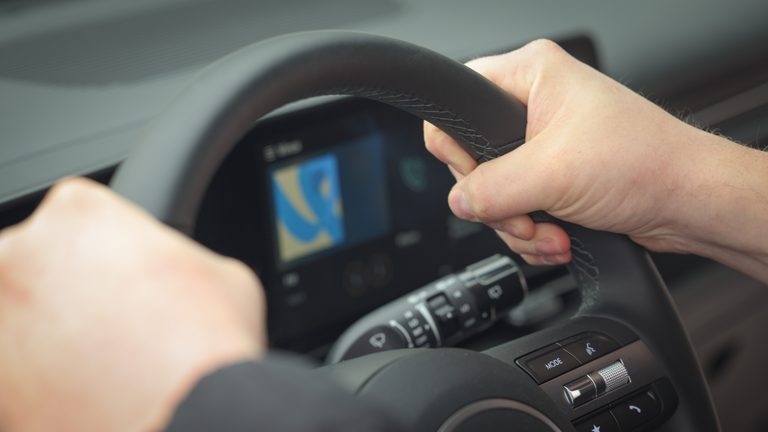
Exploring Data Extraction from Android Devices: What Data You Can Access and How
Digital forensics expert Mattia Epifani outlines comprehensive approaches to Android device data extraction, comparing four acquisition scenarios based on device state and unlock code availability. Epifani details the evolution from traditional bit-by-bit copying to modern challenges involving solid-state storage, encryption, and software restrictions.
Read more (blog.digital-forensics.it)
AI Chatbot Website Found Hosting Child Sexual Abuse Images
The Internet Watch Foundation has discovered AI-generated child sexual abuse images on a chatbot website that appears legitimate but contains a hidden section with disturbing content. Analysts found 17 incidents of illegal material between June and August 2025, including images of children as young as seven and chatbots designed to simulate sexual scenarios with minors. Kerry Smith warns that AI technology continues to be exploited by offenders, while new legislation criminalizing AI tools for creating such content cannot come soon enough.
Amped Authenticate Introduces Perspective Filter for Deepfake Detection
Amped Authenticate has introduced a new Perspective filter designed to detect deepfakes and manipulated images by analyzing geometric inconsistencies that synthetic generation methods struggle to produce accurately. The filter examines vanishing points and horizon lines in images to identify perspective anomalies that remain detectable even after social media compression and metadata removal. Amped Software explains that the tool works by having forensic practitioners mark parallel lines in images to verify whether vanishing points align correctly on the same horizon, providing a geometric approach to authenticity verification.
New HEART Tool Parses Apple Health Data for Digital Forensics
Metadata Forensics releases HEART (Health Events & Activity Reporting Tool), a free forensic tool that analyzes Apple Health and Fitness application data from Full File System extractions. Version 1.0 supports 31 artifacts including heart rate, steps, sleep data, and workouts, generating HTML reports with light and dark modes. James McGee announces the tool is available on GitHub and acknowledges contributions from the digital forensics community including Sarah Edwards, Ian Whiffin, and Alexis Brignoni.
Read more (metadataperspective.com)
OSINT Experts Call for Major Reform to Address Industry’s Broken State
Open-source intelligence (OSINT) practitioners face critical issues including platform bias, insecure tools, and lack of standardization that compromise intelligence quality. Paul Wright and Neal Ysart from The Coalition of Cyber Investigators argue that algorithmic filtering on social media platforms produces inconsistent results for investigators, while third-party OSINT tools often have poor security and are frequently abandoned by developers.
Read more (coalitioncyber.com)
DFRWS EU 2026 Extends Paper Submission Deadline to October 2025
The Digital Forensics Research Conference Europe has extended its paper submission deadline to October 10, 2025, for the upcoming conference in Linköping, Sweden. DFRWS EU 2026 will take place March 24-27, 2026, as a hybrid event hosted by Linköping University in cooperation with Digital Forensics Sweden. The conference will include technical workshops, the second Digital Forensic Doctoral Symposium, and the co-located Women in Forensic Computing Workshop on March 23.
Mental Health Amongst Expert Witnesses
Harper Shaw Investigation Consultants highlights concerns about mental health challenges facing expert witnesses in legal proceedings. Expert witnesses often experience significant stress and psychological pressure due to the demanding nature of their testimony and cross-examination processes. The consulting firm emphasizes the importance of addressing these mental health issues to maintain the quality and reliability of expert testimony in legal cases.