Bruteforcing Linux Full Disk Encryption (LUKS) With Hashcat

by Patrick Bell This walk-through will show you how to Bruteforce LUK volumes using hashcat, how you can mount a LUK partition, and how we can image it once it’s decrypted. Scenario: You’ve got a Macbook in. MacOS has been

Memory Dump Formats

by Chirath De Alwis As in other storage devices, volatile memory also has several formats. According to the acquisition method that is in use, the captured file format can be vary. According to (Ligh et al, 2018) the most commonly

Detection Of Backdating The System Clock In MacOS

by Oleg Skulkin & Igor Mikhaylov Recently we received a good question from one of our DFIR mates: “How can one detect backdating of the system clock forensicating macOS?”. This is a really good question, at least for us, so

Charlatans In Digital Forensics

by James Zjalic There’s a topic that is rarely publicized in the world of digital forensics, but is well known to those within the field and stories are often traded between experts when they meet at conferences and conventions. That

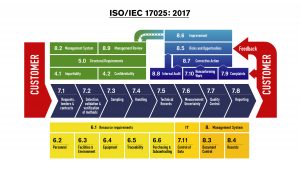
ISO 17025 For Digital Forensics – Yay Or Nay

by Robert Merriott “Much of the digital forensic community desires to have their evidence seen in court as forensically sound and bulletproof, yet do not want to go through the rigors that other traditional forensic sciences have done to prevent

Job Hunting In The DFIR Field

by Jessica Hyde, Magnet Forensics For those who don’t know, in addition to my work at Magnet Forensics, I teach Mobile Device Forensics at George Mason University. In addition to teaching the skills necessary to acquire and parse data from

Imaging Locked Motorola Devices Via Bootloader Exploit

Last-generation Android devices are gradually getting more secure, even approaching iOS-grade security in some usage scenarios. Equipped with fingerprint readers and compulsory encryption of the data partition, Android smartphones became a much tougher acquisition target compared to just a couple

The CSI Effect – Expectations Vs Limitations

by James Zjalic Much has been written about the CSI phenomenon within digital forensics circles, but is there a way we as experts can reduce this effect, maybe not globally but at least amongst our own clients? In just the

Making Smart Technology Decisions To Improve Case Collaboration

by Christa Miller, Magnet Forensics An estimated 6.1 billion smartphones will be in the world by 2020, and as development of the Internet of Things—connected wearables, household appliances, vehicles, and more—continues, that number will be dwarfed by the 20.4 billion

Windows Drive Acquisition

by Oleg Skulkin & Scar de Courcier Before you can begin analysing evidence from a source, it first of all needs to be imaged. This describes a forensic process in which an exact copy of a drive is made. This

Linux Memory Forensics: Dissecting the User Space Process Heap

by Frank Block and Andreas Dewald Abstract The analysis of memory during a forensic investigation is often an important step to reconstruct events. While prior work in this field has mostly concentrated on information residing in the kernel space (process

Focused Digital Forensic Methodology

by Haider H. Khaleel Abstract Since the end of the 19th Century until the current time, law enforcement has been facing a rapid increase in computer-related crimes. In the present time, digital forensics has become an important aspect of not