Digital Forensics: Iron Bars, Cement And Superglue

by James Zjalic When most people think of digital forensics they think of CSI Miami: hackers in hoodies and Mission Impossible type biometrics. But under the superficial exterior, there is a framework of laws, regulations, best practices, guidelines, and standards

New Security Measures In iOS 11 And Their Forensic Implications

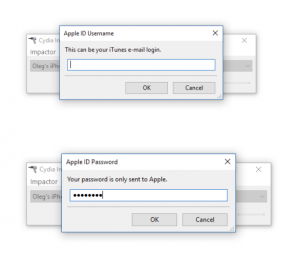
by Oleg Afonin, Elcomsoft Apple is about to launch its next-generation iOS in just a few days. Researching developer betas, we discovered that iOS 11 implements a number of new security measures. The purpose of these measures is better protecting

Cellular GPS Evidence: Waze + Cellebrite + CellHawk

by Patrick Siewert, Principal Consultant, Pro Digital Forensic Consulting It’s becoming common knowledge that location evidence on cellular devices can provide a wealth of evidence in any number of civil, criminal and investigative matters. Law enforcement agencies use cellular location

When No Conclusion Can Be A Conclusion

by James Zjalic Before CCTV systems were conceived, eye-witness accounts were the only method of identifying a suspect based on their facial features. The pitfalls of this type of identification have been well documented numerous times with regard to the

Physical Imaging Of A Samsung Galaxy S7 Smartphone Running Android 7.0

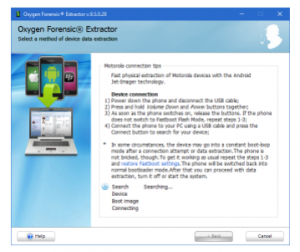
by Oleg Skulkin & Igor Shorokhov The release of Android Nougat has brought new challenges to mobile forensic examiners: the smartphones running this version most likely have encrypted partitions with users’ data, their bootloaders are locked and classic custom recovery

Digital Forensics as a Big Data Challenge

by Alessandro Guarino, StudioAG Abstract Digital Forensics, as a science and part of the forensic sciences, is facing new challenges that may well render established models and practices obsolete. The dimensions of potential digital evidence supports has grown exponentially, be

The Future Of ENF Systems

by James Zjalic The subject of authentication is important across the entire digital forensic field and we as examiners have various weapons at our disposal in which to defend against the onslaught of manipulators, liars and charlatans. Authentication is frequently

An Introduction To Challenges In Digital Forensics

by W.Chirath De Alwis Digital forensics is a technique in the identification of computer based crimes. But digital forensics faces a few major challenges when it comes to conducting investigations. According to Fahdi, Clarke & Furnell (2013), th challenges of

RAM Forensic Analysis

by Eliézer Pereira 1 Goal The purpose of this article is show how to perform a RAM memory forensic analysis, presenting some examples of information that can be retrieved and analyzed to help identify indications of security incidents as well

Remote Forensics Of Windows 10 Mobile Devices

by Oleg Afonin, Elcomsoft Microsoft has developed Windows 10 as the one OS for all types of devices from servers to wearables. Desktops, laptops, two-in-ones, tablets and smartphones can (and do) run a version of Windows 10. There are countless

A Method For Verifying Integrity And Authenticating Digital Media

by Martin Harran, William Farrelly & Kevin Curran Due to their massive popularity, image files, especially JPEG, offer high potential as carriers of other information. Much of the work to date on this has focused on steganographic ways of hiding

An Introduction To Theft Of Trade Secrets Investigations

by Laurence D. Lieb, Managing Director, HaystackID. The subjects we will be covering include: Defining When One Should Reasonably Panic Reasonable Triage Steps to Take in Order to Identify if There is Only Smoke or an Actual Fire The Importance

Challenges Of ISO 17025 Accreditation – Survey Results

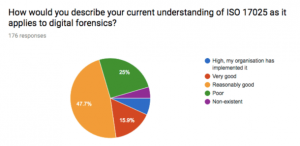
A group of forensic practitioners has recently conducted a survey into the ISO 17025 scheme – its effectiveness, and its relevance for digital forensics. The survey was conducted using Google Forms and was aimed at forensic practitioners on the front

Internet Of Things Mobility Forensics

by K M Sabidur Rahman & Matt Bishop (University of California Davis) and Albert Holt (NSA) Abstract The Internet of Things (IoT) comes with great possibilities as well as major security and privacy issues. Although digital forensics has long been

How Do Criminals Communicate Online?

Flashpoint, a business intelligence agency specialising in the deep and dark web, recently published a report on the economy of criminal networks online. The report looks not only at where criminals go to communicate on the internet, but also how