You are dealing with more video evidence, from more sources, under tighter deadlines than ever. To help you move from acquisition, through analysis, to court-ready deliverables, Amped Software is releasing a new three-part blog series. It walks you step by step through a complete forensic video workflow using Amped FIVE.
What to Expect from This Series?
Published weekly, each installment focuses on a critical stage of the case lifecycle:
- from video evidence acquisition and integrity verification
- through forensic video analysis
- and finally to reporting and presentation for the court
You’ll follow along with a realistic investigation that includes body-worn video, drone footage, mobile phone clips, dashcam, GoPro, and CCTV. That’s exactly the diverse mix you face today.
Parts One and Two Are Live!
1) First Steps of the Forensic Video Workflow
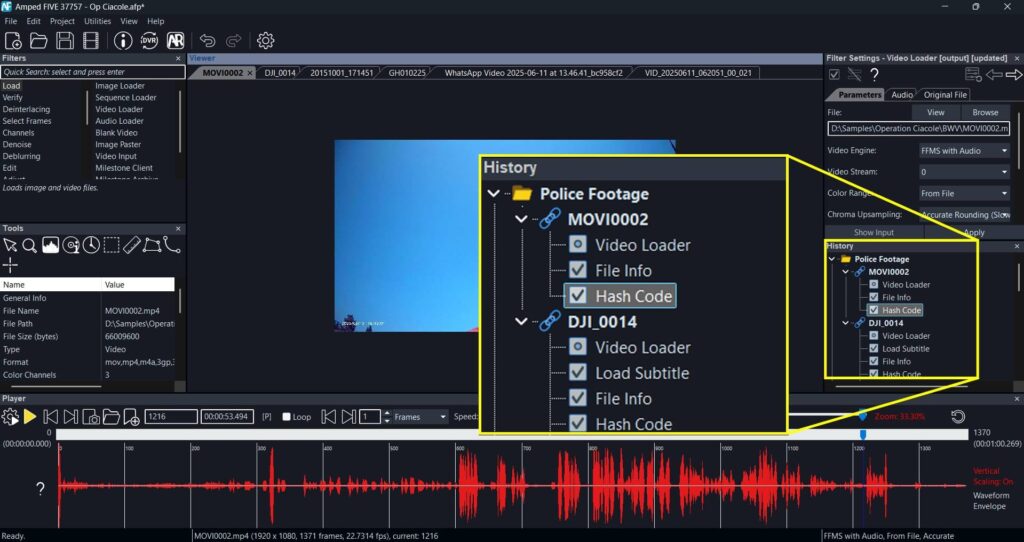
In the first article, you’re guided through building a defensible foundation: creating the project, hashing files with Copy and Verify, and conducting an initial technical review with Advanced File Info.
You’ll learn how to spot codec and container issues, document timestamp discrepancies across sources (including pixel-embedded times and absent/incorrect device clocks), and leverage subtitles such as drone SRT to enrich later presentation.
The blog post also shows practical organization tips, such as separating police-generated and witness-generated evidence and embedding hashes directly into your workflow. This helps you make reporting faster and more robust.
2) Deeper Analysis of Video Evidence
In this second installment, you’ll learn how to move beyond first-pass triage to validate your video evidence. Amped Software walks you through confirming or challenging timelines by correlating file metadata, creation times, and GOP structure. It also shows you how to reconcile mismatched on-screen times across sources and correct audio/video sync when devices drift.
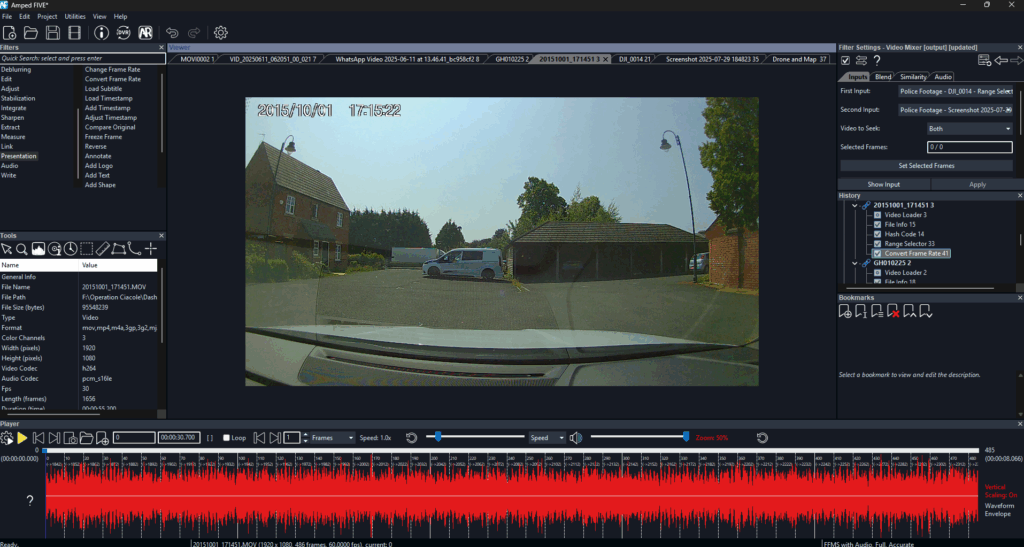
You’ll learn how to normalize frame rates so dissimilar cameras can share a single timeline, prepare clean presentation copies while preserving untouched originals, and organize assets for accurate multi-source sequencing.
By the end of the post, you’ll understand how to produce synchronized, cross-referenced evidence that’s ready for clear narrative building in the final phase.
Coming Next: Generate a Report, Present Persuasively
The final episode will show you how to turn your case work into courtroom-ready deliverables. The last step of the forensic video workflow with FIVE is to generate a comprehensive forensic report that documents your methodology from start to finish.
And … Check Out Amped’s Blog
Don’t miss the finale. Read parts one and two on Amped’s blog today, and check back in a week for part three.
The conclusion to this case-based journey from video evidence acquisition to presentation with Amped FIVE awaits you!